Lighting the full American football play
For a field used for both practice and Friday-night games, start by documenting the most demanding scheduled use. A training-only calculation should not be presented as a competition or television design. Include the track and bleachers in the site model even when they are outside the playing-area calculation: they affect setbacks, aiming and the views of spectators.
American football combines long sight lines, frequent changes of play direction, high airborne objects, detailed end-zone activity, and spectators or cameras looking across the field. A design must serve players, officials, spectators, maintenance teams, and any recording system without assuming that a bright horizontal average alone proves good visibility.
Define the visibility task before selecting output
| Area or decision | Operational requirement | Design check |
|---|---|---|
| End zones | Review goal-line corners and boundary catches | Separate minimum-light results from the field average |
| Passing routes | Check useful light on players and the airborne ball | Review vertical planes and upward viewing directions |
| Team sidelines | Allow for benches, officials and service access | Keep poles outside required clearances |
| Broadcast or streaming | Record actual camera locations and frame rates | Agree vertical-light and flicker acceptance criteria |
End-zone, passing and sideline visibility
End zones become visually weak
A layout optimized only for the center can leave goal lines, corners, team areas, and scoring zones below the intended level. These areas require explicit calculation points and must not be treated as leftover coverage.
Players see the light source instead of the play
Poor pole positions or aggressive aiming can place intense luminaires in common viewing directions. The resulting discomfort reduces contrast and makes it harder to track a high pass, especially when players turn toward an end zone.
Camera expectations arrive late
A venue may begin with training requirements and later add streaming, slow motion, or broadcast use. Vertical light, color rendering, flicker behavior, and control scenes should be discussed before the electrical and structural design is frozen.
Field changes invalidate the quotation
Track lanes, bleachers, scoreboards, pole setbacks, neighboring property, and usable service access affect the design. A quotation based on field length alone cannot establish a responsible quantity or aiming schedule.
From pole setbacks to game-night scenes
Separate playing and surrounding zones
Calculate the full playing surface, end zones, sidelines, bench areas, and critical circulation zones separately. This reveals local minimums that a single average value can conceal.
Coordinate pole geometry and beam families
Use mounting height, setback, cross-aiming distance, and obstruction data to combine appropriate narrow and medium distributions rather than applying one beam to every position.
Review player and camera viewing directions
Check glare-sensitive lines toward the end zones, high balls, scoreboards, and principal camera positions. Accessories and aiming limits should be part of the approved configuration.
Plan operating scenes
Training, competition, cleaning, security, and event modes may need different output levels. Define switching or dimming groups early so the controls match the venue operation.
Retrofitting an existing four- or six-pole field
Survey every pole rather than assuming matching heights and brackets. Record mounting elevations, setbacks, available circuits, the condition of the structure and the existing aiming angles. Reusing poles can simplify construction, but increasing the number of fittings can change wind loading and access requirements. Have the structure checked separately from the lighting calculation. Before the old system is removed, photograph problem views from both end zones and record baseline measurements so the upgrade can be assessed on comparable evidence.
Product options for american football field lighting design
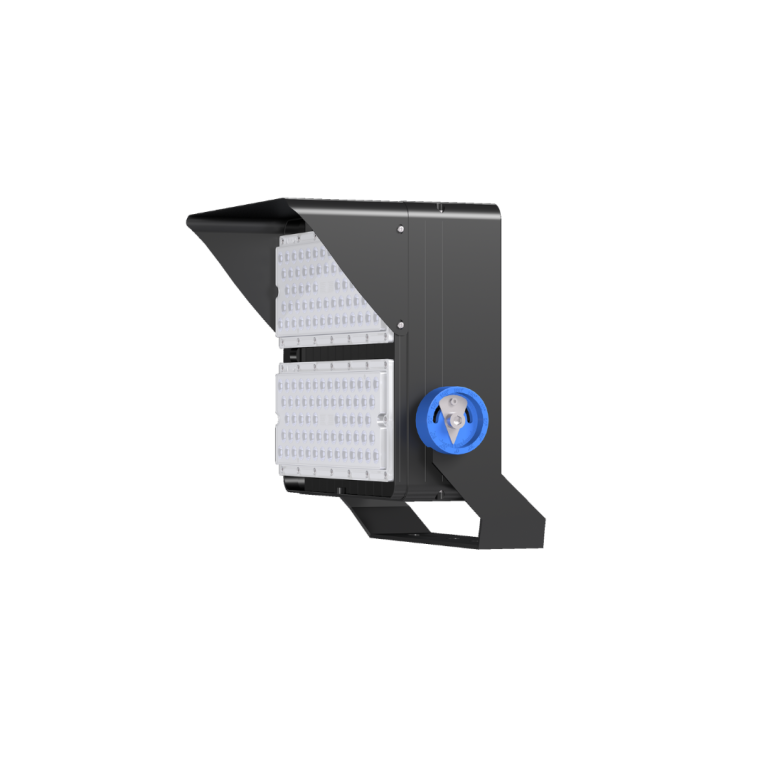
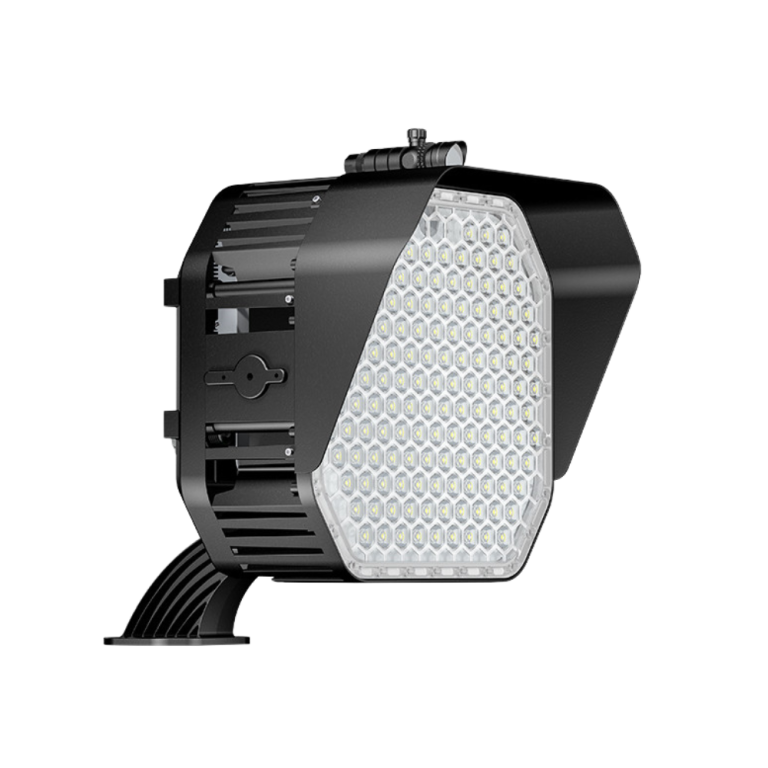
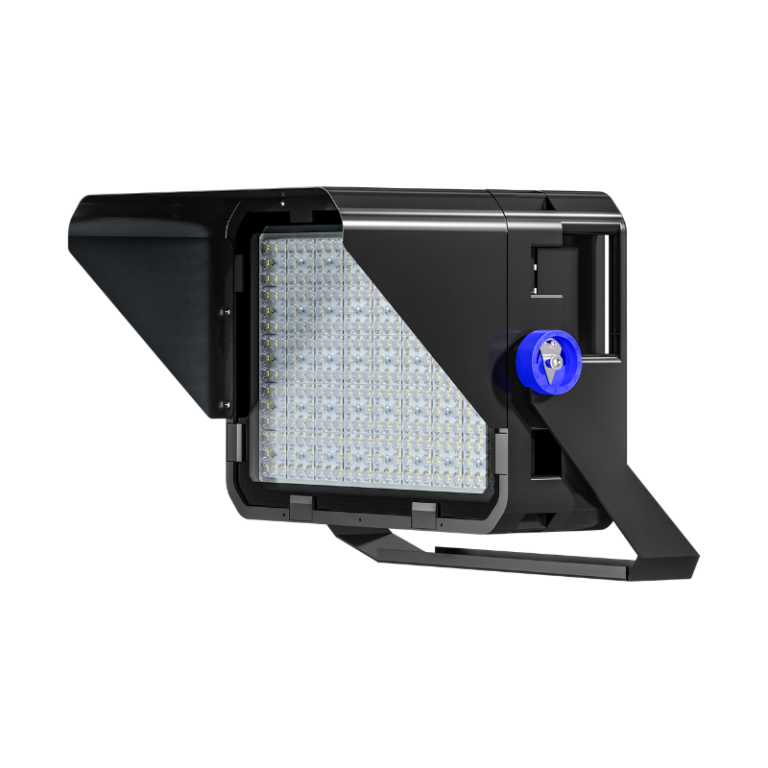
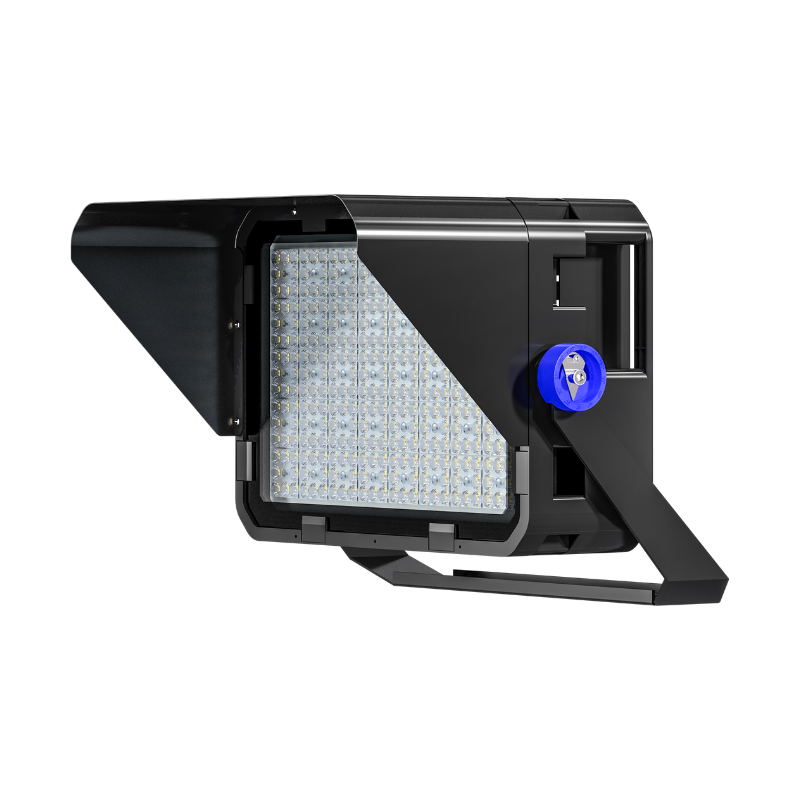
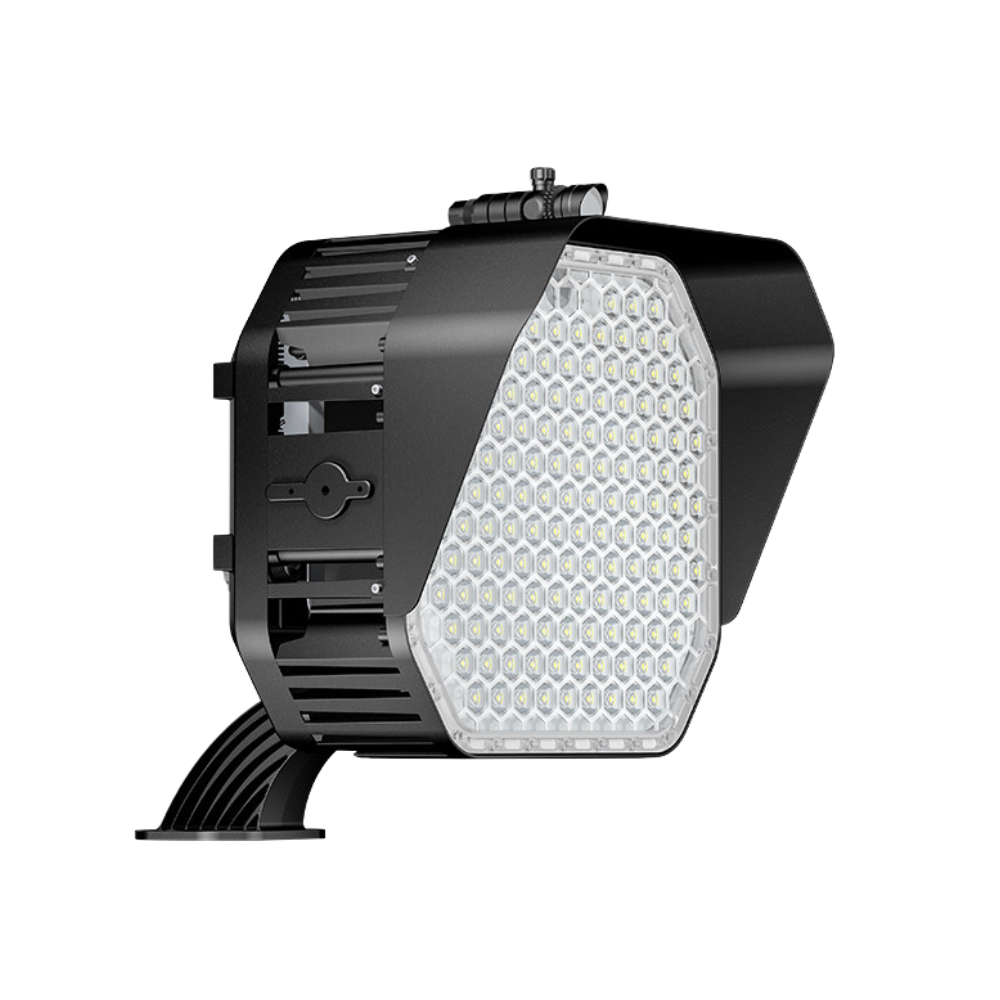
Compare Hishine Hi-Titan LED Stadium Light for its range of optical and control configurations with Hishine Hi-Shoot LED Stadium Light when the mounting positions require a different beam family. Neither model should be ordered by wattage alone. Request the photometric file for the exact quoted configuration and use that file in the field calculation.
Prepare the project brief and acceptance checks
For the final aiming session, identify each luminaire by pole and position, then check the end zones with the full game scene operating. Keep practice, competition and maintenance scenes separately labelled. Send the field drawing, pole survey, competition brief and camera plan with your inquiry so the proposed fixture schedule reflects the venue you actually operate.