Make the tennis ball visible through every rally
The lighting calculation must cover the usable court envelope, including the space behind each baseline and alongside the doubles sidelines. A player moving backward to return a lob should not leave the designed area. Start with court orientation, fencing, neighboring courts and the most frequent viewing directions, then choose pole locations and beam combinations.
Tennis demands rapid visual response to a small, fast ball moving across the court and above the player. Lighting must remain comfortable when serving, looking toward the baseline, or tracking a lob. Single courts, club courts, and multi-court facilities also create different cross-lighting and boundary conditions that require a purpose-built layout.
Single-court and club layouts need different checks
| Area or decision | Operational requirement | Design check |
|---|---|---|
| Single residential court | Property boundaries and serving views | Review the neighbors’ view of the sources |
| Two adjacent courts | Cross-light and independent bookings | Calculate one court on and both courts on |
| Club court bank | Consistent appearance across courts | Keep labels and control scenes easy to operate |
| Covered court | Roof height and overhead sight lines | Coordinate with beams and ball-impact protection |
Serving, lobs and adjacent-court glare
The ball disappears against a dark background
Horizontal values alone do not describe how well players see a ball in flight. Light direction, vertical visibility, background brightness, and local uniformity all affect contrast.
Serving players look into the fixtures
Pole placement near baselines or excessive upward aiming can create direct glare during serves and overhead shots. The common player sight lines must guide placement and tilt.
Adjacent courts interfere with each other
On multi-court sites, luminaires for one court can become glare sources for the next. Shared poles, court spacing, fences, and spectator positions need to be modeled together.
Perimeter light becomes a planning issue
Courts are often close to residences or roads. A design that pushes light outside the fence can face complaints, restrictions, or costly rework.
Court-by-court optics and switching
Calculate each court and its run-off area
Include the full playing rectangle, baselines, sidelines, and required safety margins. Multi-court plans should show each court separately as well as the combined site.
Use cross-lighting with disciplined aiming
Coordinate poles on both sides so players receive useful light from more than one direction without placing intense beams in normal service and return views.
Check fence and pole constraints early
Fence height, gate locations, court orientation, pole setback, and underground services can eliminate otherwise attractive mounting positions.
Define control by court or zone
Clubs can reduce energy use by switching individual courts, half banks, or training levels instead of operating the entire facility for one booking.
What a useful tennis lighting report should show
Request the calculation area and grid, maintained average and minimum values, the stated uniformity definition, pole heights, fixture orientations and the selected beam for each fitting. Review the view from both baselines, including an upward serve direction. If only one court will operate at quieter times, confirm that its light remains acceptable without relying on spill from the adjacent court. Discuss switching delays and booking-system integration before electrical circuits are finalized.
Product options for tennis court lighting design & led fixtures
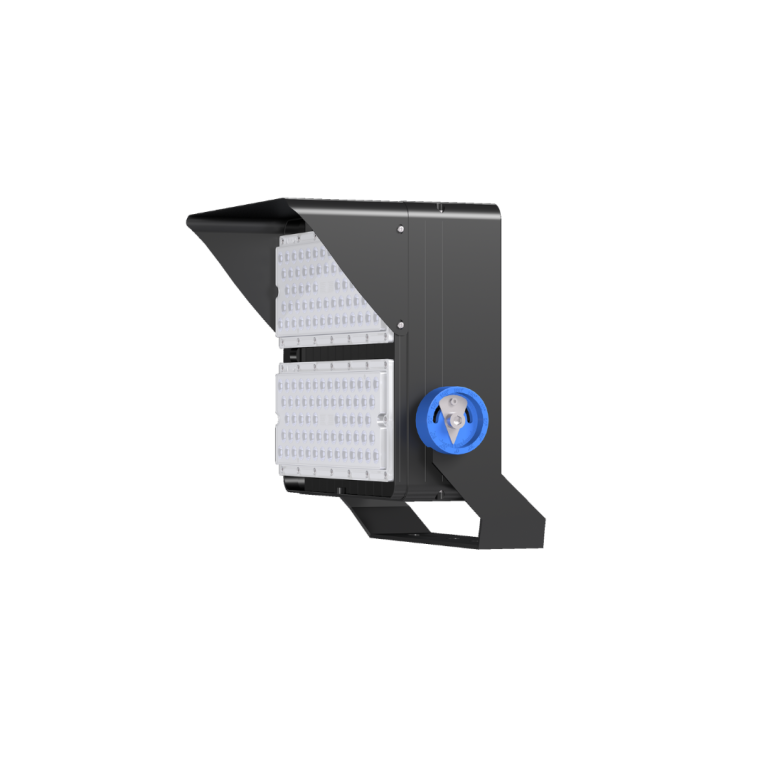
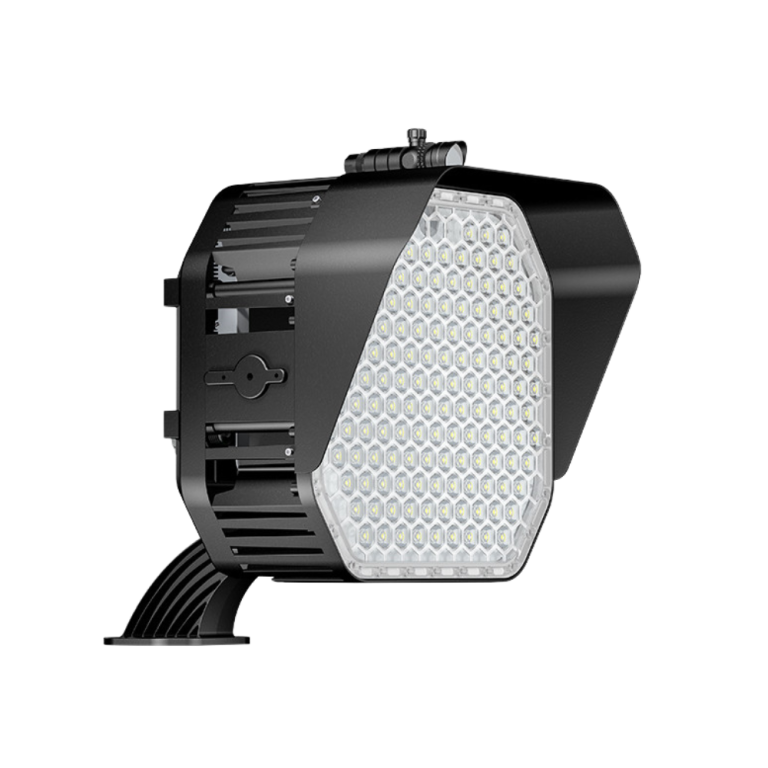
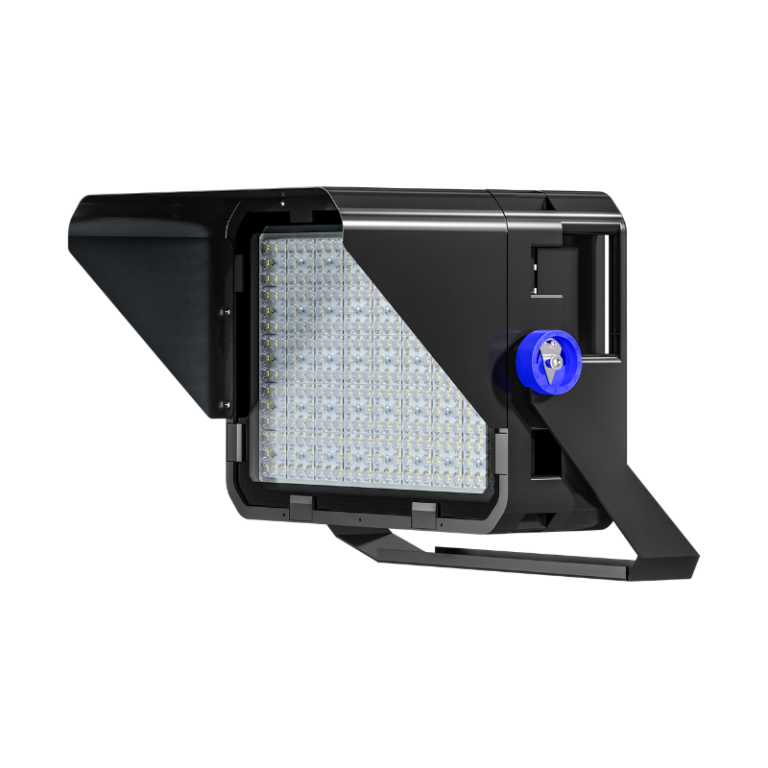
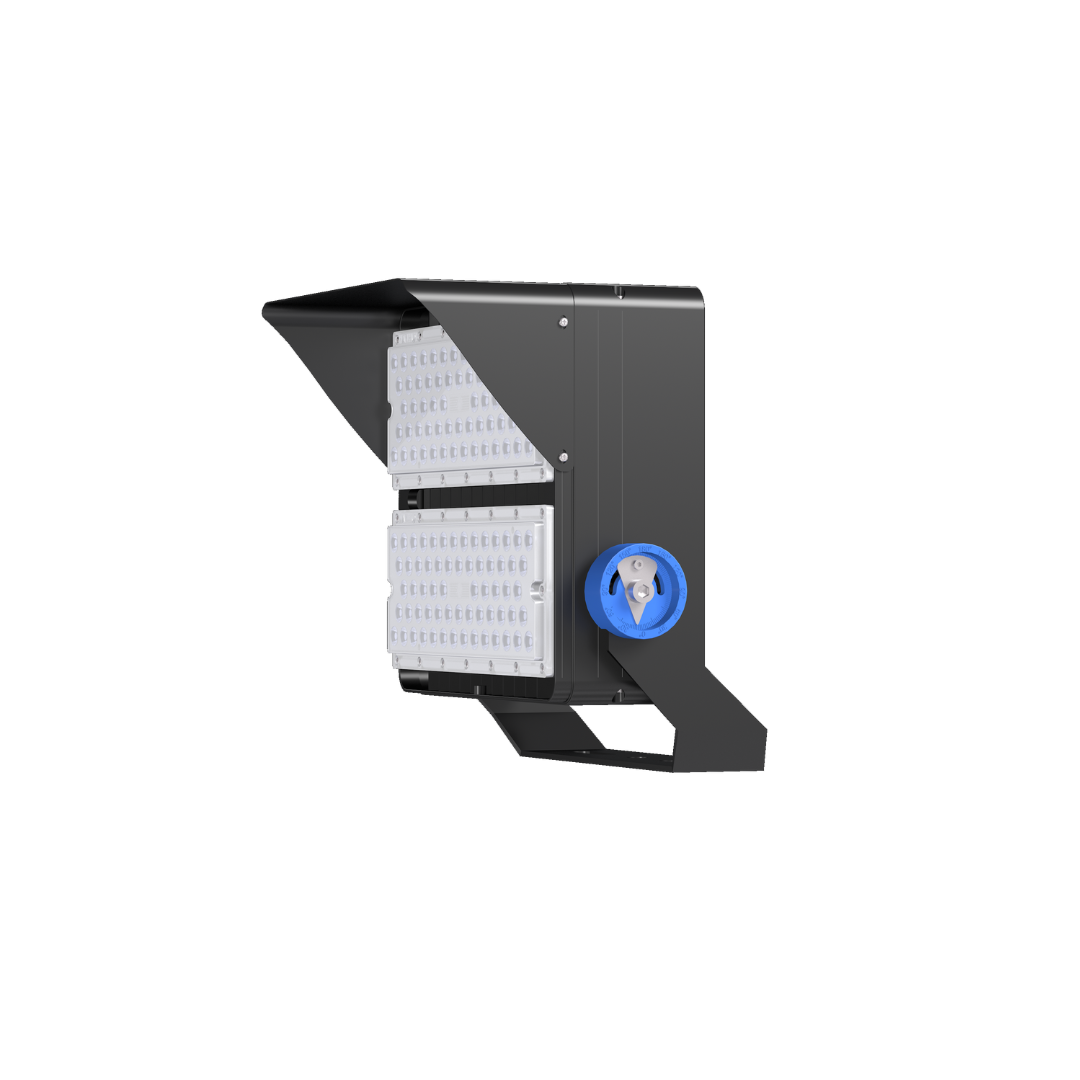
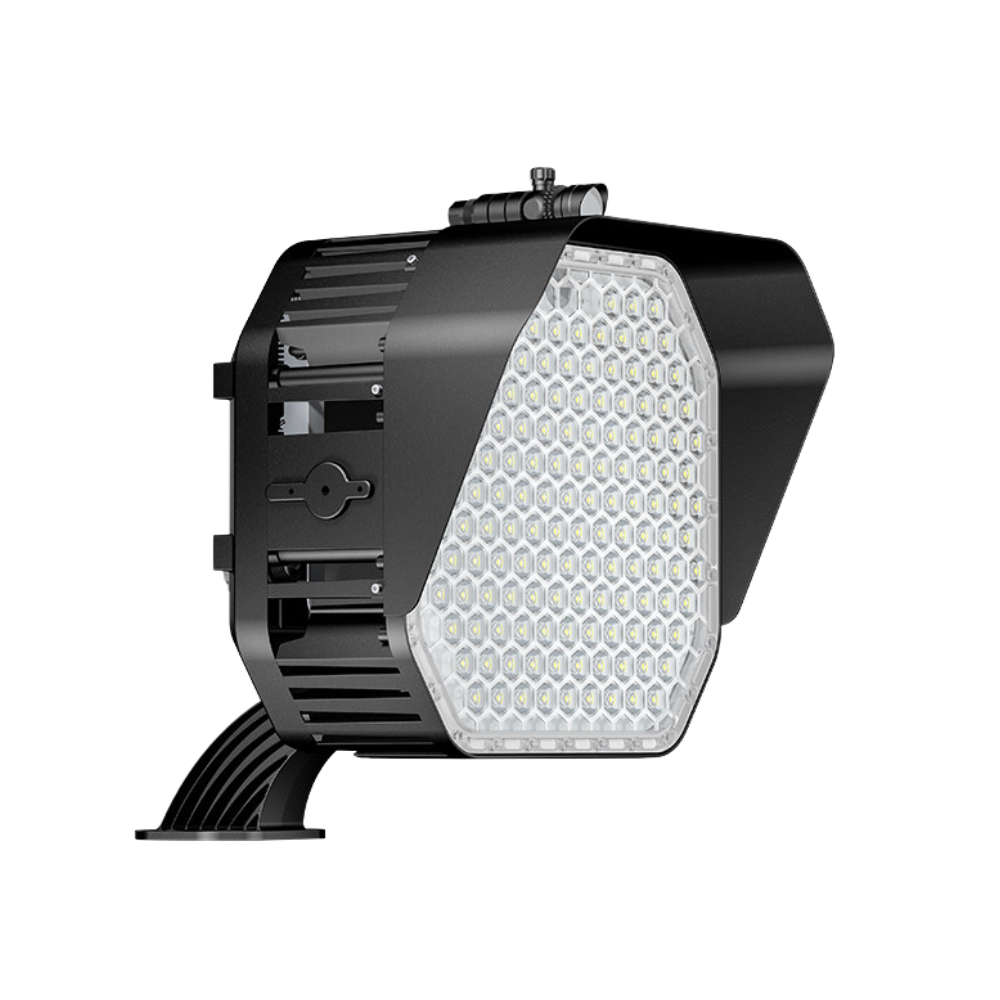
Review Hishine Hi-Flood LED Stadium Light for outdoor court layouts and Hishine Hi-Shoot LED Stadium Light where alternative distributions help reach the far side without excessive tilt. Product selection must follow court geometry and the selected optical file. A stadium product name does not establish suitability for a low pole close to the baseline.
Prepare the project brief and acceptance checks
At handover, play-test the sight lines as well as checking measurements. Confirm that a ball remains visible near the fence and behind the baseline, and that aiming adjustments do not create a new problem on the neighboring court. Supply a dimensioned court plan, fence heights, pole restrictions and booking hours for a tailored recommendation.