Choose the indoor or outdoor basketball solution first
Basketball lighting must accommodate athletes looking toward the basket and ceiling, not just a person standing at floor level. The first choice is between a roof-mounted indoor system and an outdoor pole-mounted system. They require different fixtures, environmental protection, access plans and glare checks, even when the court markings are identical.
Basketball concentrates fast movement, frequent changes in viewing direction, elevated targets, and activity around the key and backboards. Indoor halls add ceiling structure and impact risk; outdoor courts add pole geometry, spill light, and weather exposure. The lighting concept must start by separating these environments and the intended level of play.
Two installation paths, two selection methods
| Area or decision | Operational requirement | Design check |
|---|---|---|
| Indoor roof-mounted court | Coordinate trusses, suspended goals and services | Check overhead glare and impact requirements |
| Outdoor community court | Locate poles outside the playing clearance | Review weather exposure and boundary spill |
| Multi-use hall | Account for divider curtains and other sports | Provide separate control scenes |
| Recorded competition | Confirm camera positions and capture settings | Review color consistency and flicker performance |
Basket, backboard and upward-viewing conflicts
Backboards and players create hard shadows
A layout with light from too few directions can make the rim, backboard, and players visually merge. Balanced distribution and useful vertical light improve recognition around the basket.
Fixtures distract during shots
Players repeatedly look upward. Bright sources inside common shooting and rebounding sight lines can cause discomfort even when floor illuminance appears adequate.
Slow-motion video exposes flicker
Mobile recording and event cameras can reveal banding that users do not notice directly. Driver behavior and the intended frame-rate environment should be confirmed for camera-critical venues.
Maintenance interrupts the hall
High ceilings, retractable seating, suspended equipment, and limited lift access can turn a simple replacement into a shutdown. Access and service strategy belong in the initial design.
Coordinate the lighting with the court equipment
Choose the indoor or outdoor design path
Confirm ceiling height and structure for halls, or pole positions and neighborhood limits for outdoor courts. The fixture family and optical approach may be completely different.
Protect upward sight lines
Locate and aim luminaires to support the key, rim, and perimeter while reducing high-intensity sources in common shooting views.
Coordinate with building services
Indoor layouts must account for HVAC, sprinklers, scoreboards, acoustic panels, roof trusses, and access equipment before mounting positions are approved.
Use zones for real operating patterns
Training, competition, spectator events, cleaning, and security can use separate scenes. Controls should be understandable to facility staff and documented at handover.
Avoid lighting the floor while leaving the basket in shadow
Model the backboards, support frames and retractable equipment in their playing positions. A luminaire directly behind a structural member may deliver much less useful light than its nominal output suggests. Evaluate the basket approaches and free-throw viewpoints, then adjust row positions or aiming before adding wattage. For school halls, include the divider-curtain position because a half-hall training scene may have different shadows from the full-hall scene.
Product options for basketball court lighting: indoor & outdoor
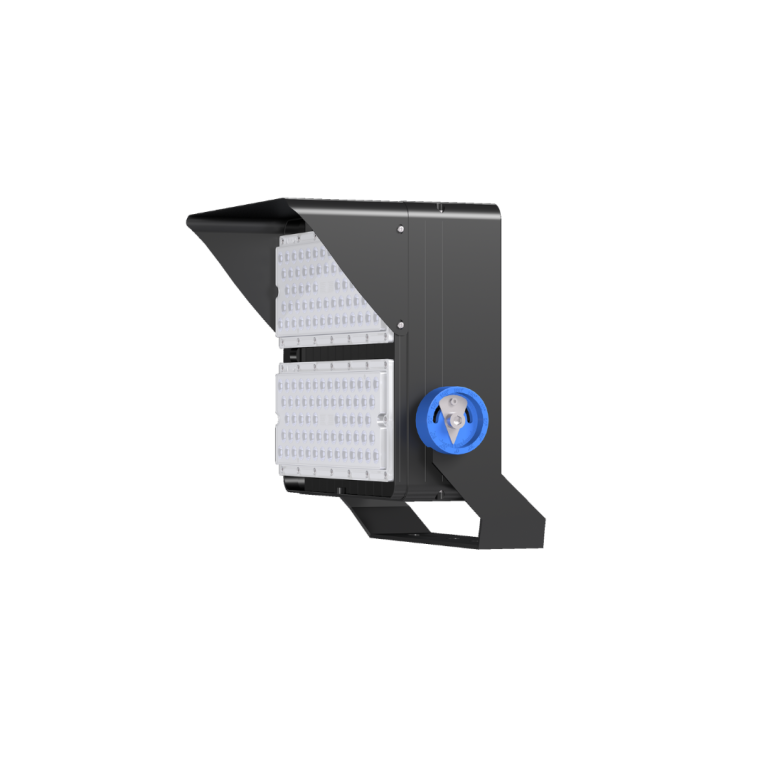
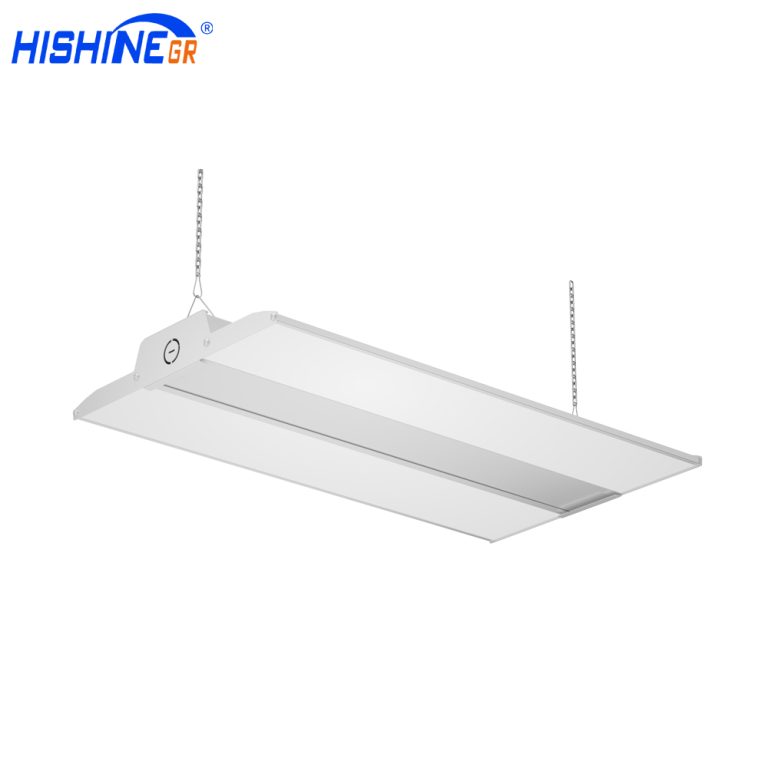
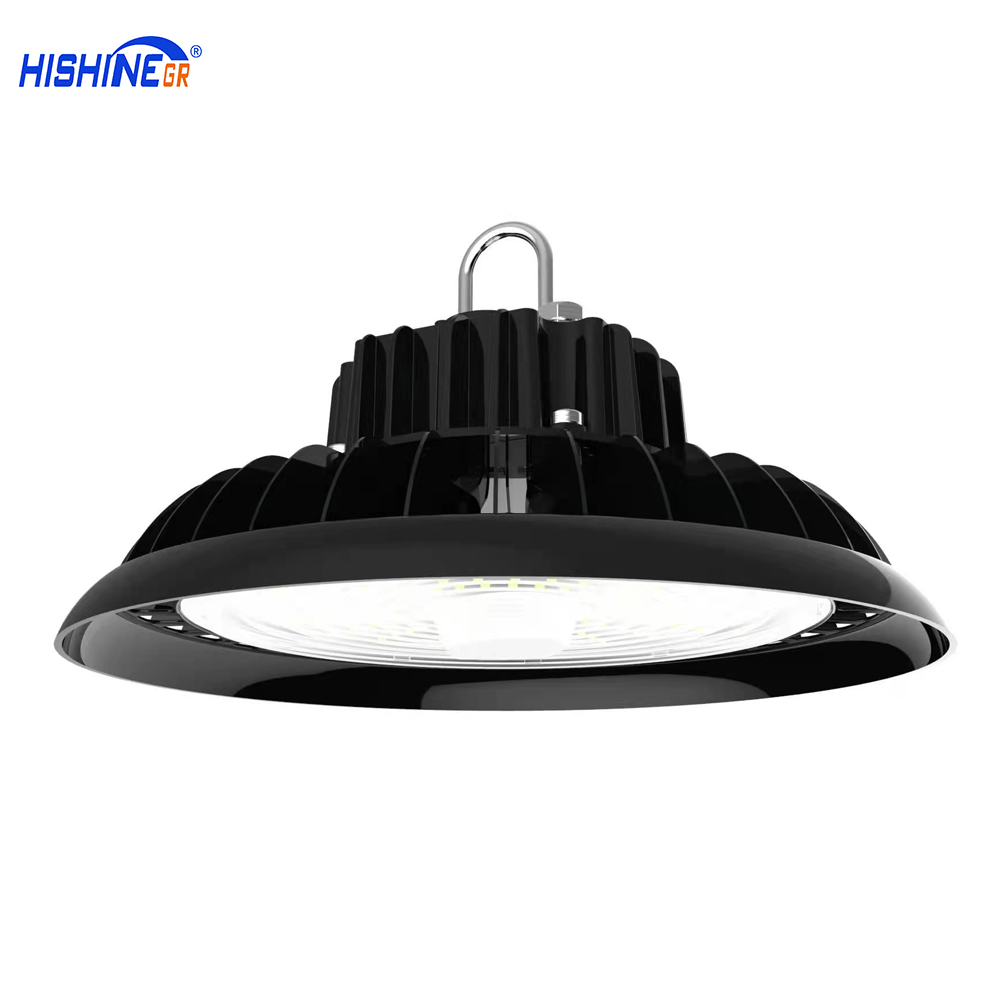
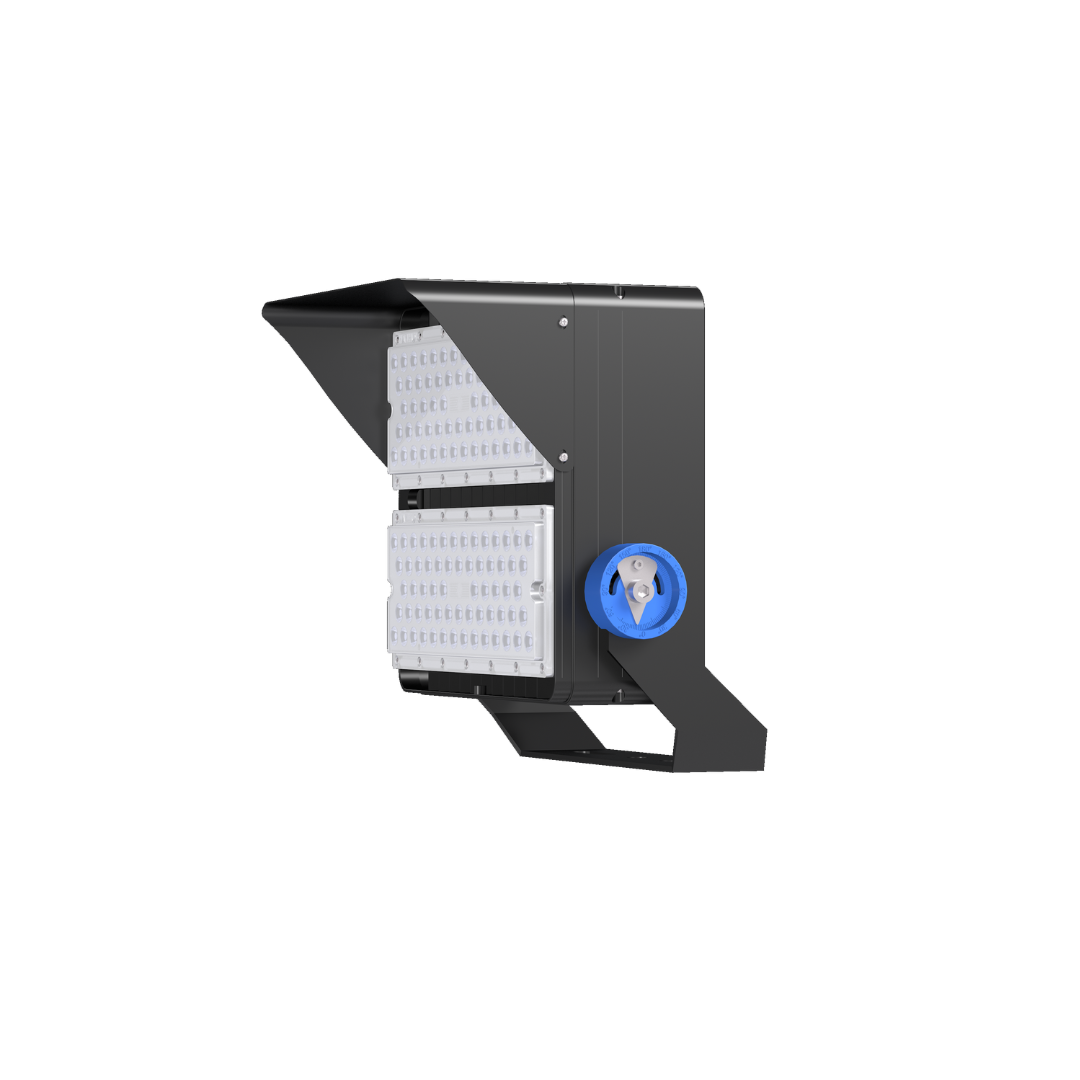
For an indoor hall, compare Hishine H5 UFO LED High Bay Light with a linear high-bay arrangement where the building geometry favors continuous rows. Ball-impact protection and glare suitability need separate confirmation. For an outdoor court, Hishine Hi-Flood LED Stadium Light can be evaluated against the pole layout and beam requirements. Indoor high bays should not be substituted for outdoor floodlights without checking mounting and exposure.
Prepare the project brief and acceptance checks
Commission the actual playing arrangement with goals lowered and curtains in each expected position. Test dimming, cleaning mode and recovery after a power interruption. Share court dimensions, ceiling or pole heights, equipment drawings, indoor/outdoor use and the competition or recreation brief.