Turn a sports brief into an auditable lighting calculation
The value of a lighting report is the decision it supports. A colored plan without input assumptions cannot establish fixture quantity, compliance or installed performance. Begin with a signed-off design brief that names the sport, level of use, owner criteria, boundary restrictions and any camera requirements. Keep provisional information visibly separate from surveyed data.
A photometric report is useful only when its geometry, criteria, luminaire files, maintenance assumptions, and calculation settings match the real project. Sports field design converts the owner brief into a coordinated optical, structural, electrical, control, installation, and acceptance package. It also makes competing proposals easier to compare on evidence rather than headline wattage.
What to ask for in the calculation package
| Area or decision | Operational requirement | Design check |
|---|---|---|
| Geometry record | Field, run-off, poles and mounting elevations | Identify the survey source and drawing revision |
| Luminaire schedule | Model, power, optics and photometric file | Match every IES file to the quoted item |
| Result pages | Calculation planes, minima and uniformity definition | Show the criteria used for comparison |
| Installation output | Fixture identifiers, aiming and control groups | Make the report usable by the installer |
Modeling errors that change the installation decision
The model uses approximate geometry
Small errors in pole height, setback, field size, tilt limits, or obstructions can change results. Assumptions must be visible and replaced when verified data becomes available.
Only the average value is reported
Average illuminance can hide weak minimums, poor uniformity, vertical-light gaps, high glare, or excessive boundary light. The report must reflect every criterion in the brief.
IES files do not match the quoted model
A calculation is not valid evidence when the photometric file, beam, output, or power differs from the commercial schedule. File and product identity need traceability.
Installation has no aiming control
A design without fixture labels, beam assignments, orientation, and aiming references cannot be reproduced reliably on site or maintained later.
A traceable path from survey to aiming schedule
Write a measurable design brief
List each calculation area, playing level, required metric, camera plane, glare or boundary condition, maintenance factor, and acceptance responsibility.
Validate the site model
Use dimensioned drawings and sections, then confirm poles, brackets, heights, obstructions, field orientation, seating, roads, and sensitive boundaries.
Iterate optics before wattage
Test mounting and distribution combinations to improve useful coverage and visual comfort before increasing output or fixture count.
Issue coordinated deliverables
Provide the calculation report, product schedule, fixture and beam labels, aiming data, assumptions, control intent, and revision status as one package.
Separate predictions from field verification
A calculated result predicts an installation under stated assumptions. The maintenance factor, reflecting surfaces, input photometry and aiming accuracy all affect the prediction. A measured result depends on the actual equipment, its condition, the operating scene, the measurement grid and ambient conditions. Agree the acceptance method before supply so differences can be investigated consistently instead of arguing over unrelated screenshots or isolated meter readings.
Product options for sports field lighting design & dialux support
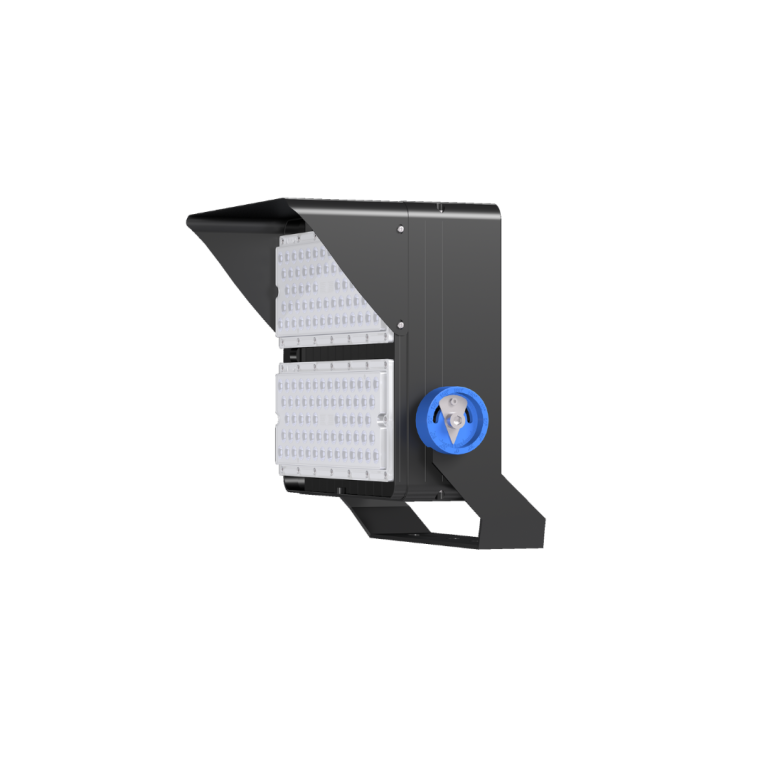
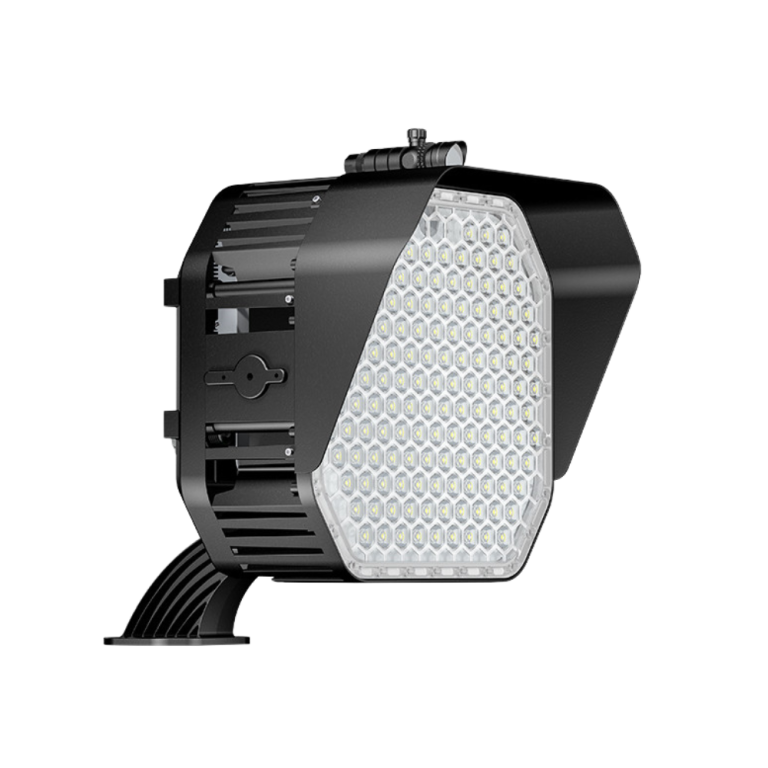
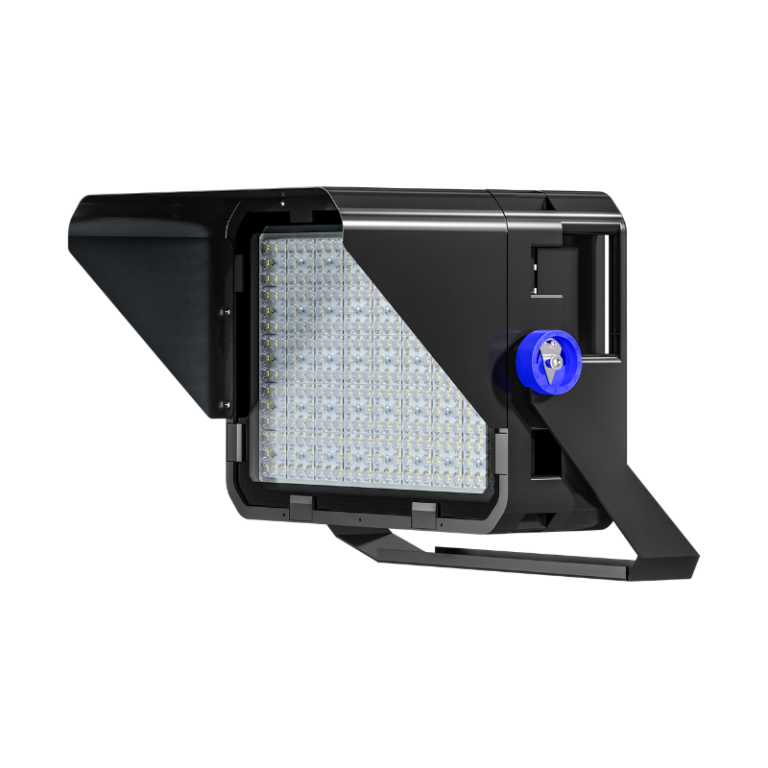
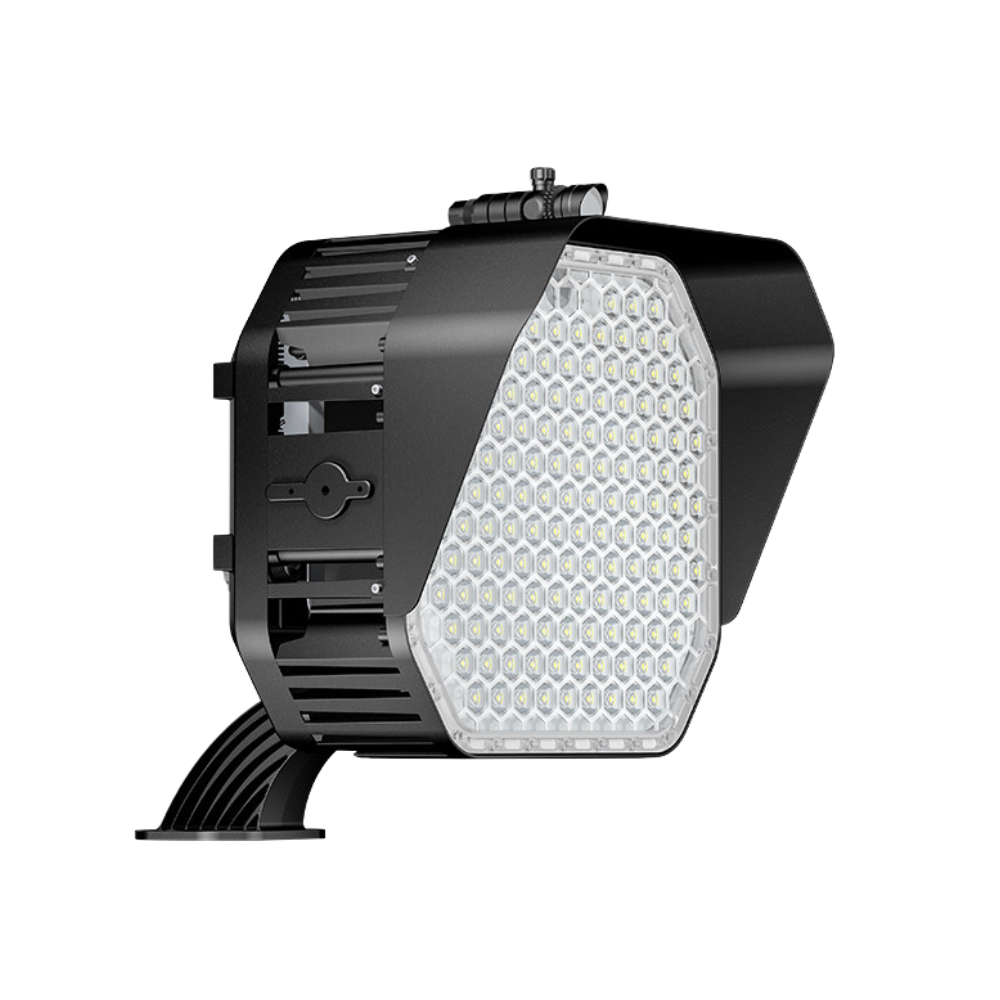
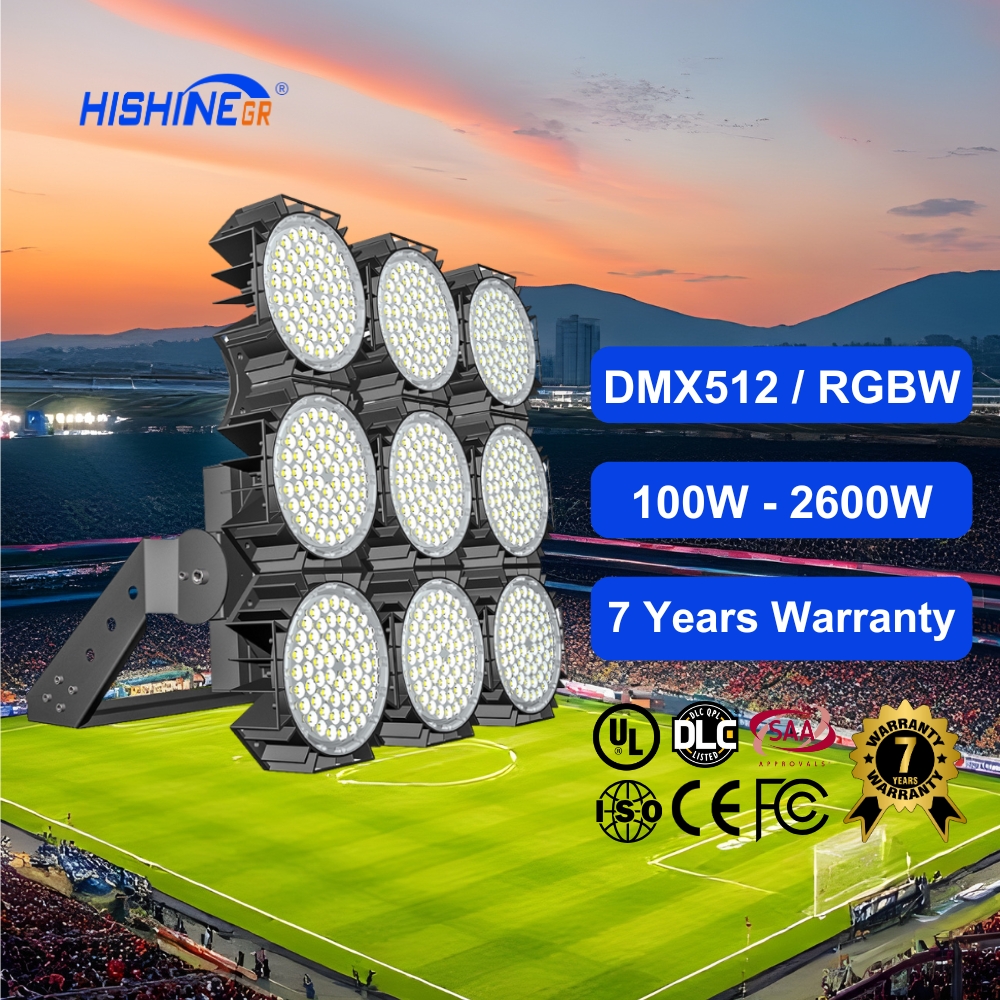
A useful comparison might test Hishine Hi-Shoot LED Stadium Light against Hishine Hi-Robot LED High Mast Light using the same geometry and criteria. The purpose is to see which optical arrangement best serves the site, not to promote a fixed model for every sport. Changing the lens, driver current or mounting position after approval may require a revised calculation.
Prepare the project brief and acceptance checks
For the first design iteration, send a scaled drawing, mounting coordinates, height restrictions and an operating brief. Identify unknowns rather than filling them with optimistic values. The final package should carry a revision number, product schedule and aiming instructions that can be checked against the delivered equipment.