Apron lighting starts with aircraft servicing and pilot sight lines
An apron is a working interface between aircraft, people and ground-support equipment. Lighting must remain useful when an aircraft occupies the stand and service vehicles are positioned around it. Establish the fleet mix, stand geometry, towing routes and airport authority requirements before assigning mast locations or selecting output. A general large-area calculation cannot establish airport suitability on its own.
Airport aprons support aircraft positioning, fueling, baggage, catering, inspection, pushback, vehicles, staff, and cameras around large moving equipment. Lighting must provide useful visibility at ground and vertical task surfaces while avoiding unacceptable glare toward pilots, tower or control viewpoints, and drivers. Every project must follow the airport owner and applicable local aviation requirements.
Build the model around a representative occupied stand
| Area or decision | Operational requirement | Design check |
|---|---|---|
| Aircraft stand | Servicing around fuselage and wings | Model aircraft shadows and equipment positions |
| Passenger or staff routes | People moving between work areas | Check crossings and changes in level |
| Vehicle circulation | Tugs, loaders and fuel vehicles | Review driver viewpoints and obstructions |
| Pilot and control viewpoints | Avoid distracting high-output sources | Submit aiming and glare review to the airport team |
Where an apron layout can fail during a turnaround
Ground averages hide vertical task problems
Staff need to see aircraft surfaces, markings, equipment, people, and signals. Horizontal illuminance alone does not describe visibility around a large aircraft.
High-mast glare reaches critical viewpoints
Mast position, beam intensity, tilt, and aircraft orientation can create glare for approaching pilots, cockpit views, drivers, or control personnel.
Aircraft and equipment create complex shadows
Fuselages, wings, boarding bridges, service vehicles, and terminal structures block light differently by stand and operating condition.
Reliability and maintenance rules are project-specific
Airside access, work permits, closures, mast lowering, circuits, emergency states, monitoring, and approved products may be controlled by airport procedures.
Coordinate stands, service vehicles and critical viewpoints
Start with the airport design brief
Obtain the owner criteria, stand geometry, aircraft types, task zones, prohibited glare directions, controls, emergency behavior, documentation, and approval workflow.
Calculate horizontal and vertical surfaces
Evaluate stands, routes, equipment areas, representative aircraft surfaces, work planes, and specified viewpoints using the required grids and assumptions.
Coordinate mast positions and obstructions
Include terminal buildings, bridges, aircraft envelopes, service roads, radar or operational constraints, and maintenance access before fixing geometry.
Document configuration and change control
Record every product, beam, accessory, bracket, aiming reference, circuit, control setting, calculation revision, approval, and field change.
Agree the acceptance process before procurement
The airport operator, designer, ground-handling team and maintenance contractor should review the same drawing revision. Record aircraft assumptions, calculation surfaces, operating scenes and restricted viewpoints. A late change to the mast location or beam can alter both shadows and glare. At commissioning, inspect representative servicing positions, verify aiming against the schedule and test control behaviour without interfering with airport operations. Retain approved settings and replacement references for each mast.
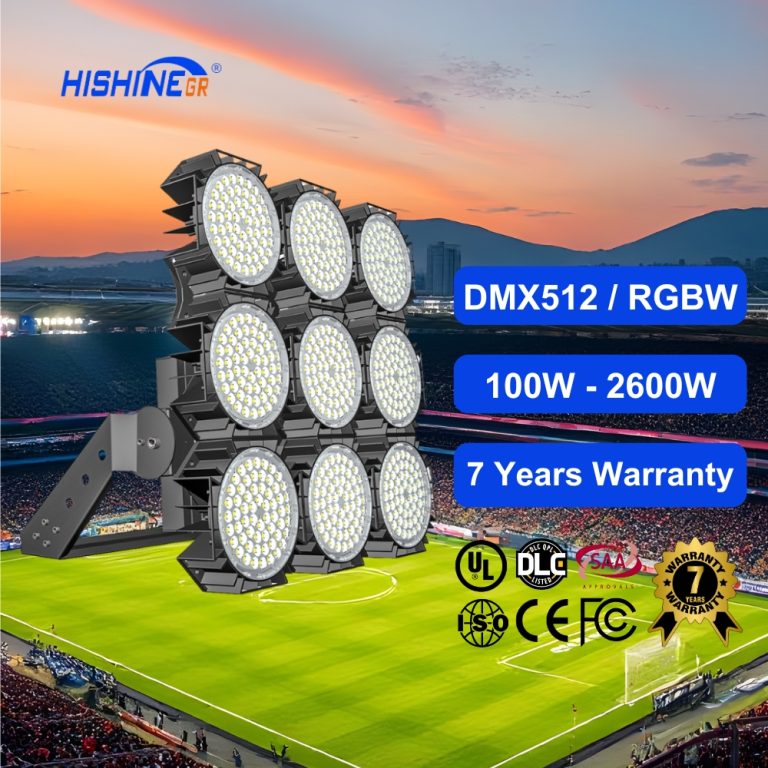
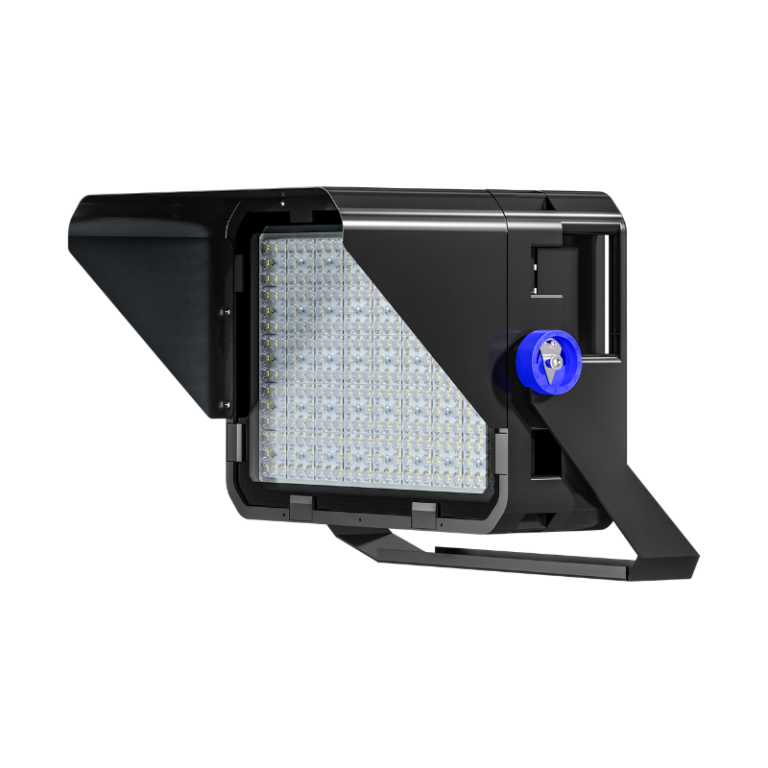
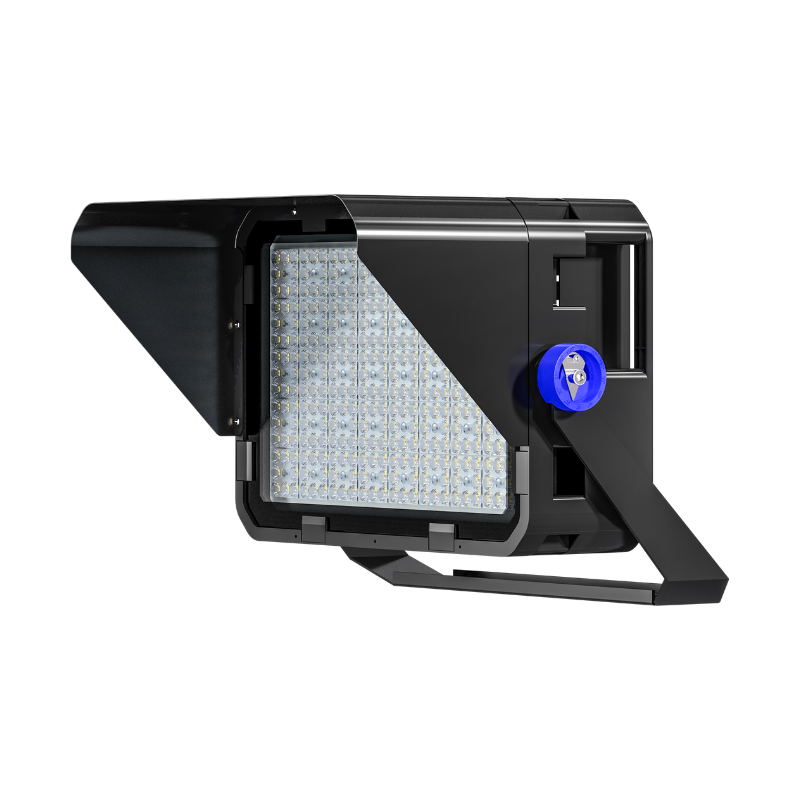
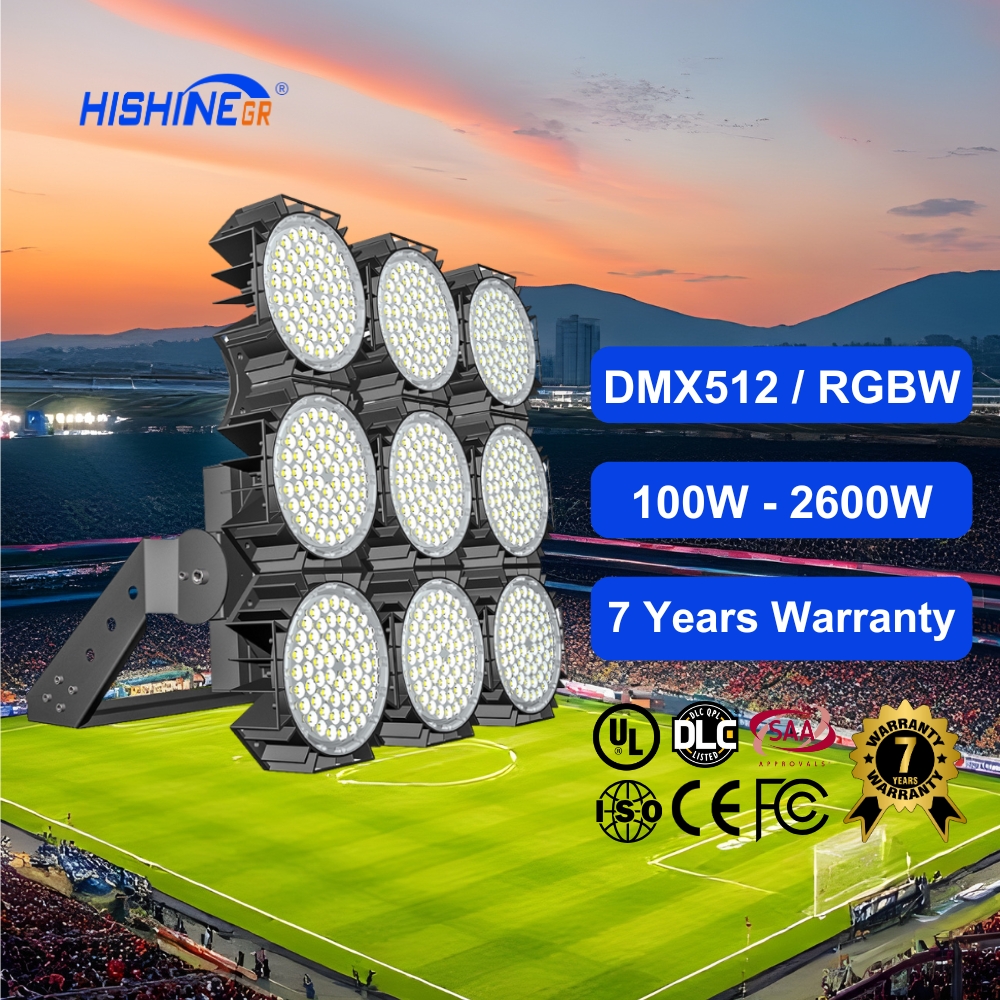
Product options for airport apron lighting
Consider Hishine Hi-Titan LED Stadium Light and Hishine Hi-Robot LED High Mast Light as candidate families for a photometric comparison where high-mast mounting is appropriate. Product naming or prior large-area use does not establish compliance for an airport. Confirm the exact optic, mounting arrangement, environmental configuration and required evidence with the responsible airport specialists.
Prepare the project brief and acceptance checks
Supply a scaled stand plan, aircraft types, obstacle restrictions, permitted mast locations, electrical arrangements and airport-specific criteria. Identify who approves the design and which site measurements are required. Treat structural, airside operational and lighting approvals as coordinated parts of the project.