Size solar street lighting from the nightly energy demand
A solar street light is an energy system as well as a luminaire. Start with the light required on the road and the hours it must operate, then check whether the solar panel and usable battery capacity can support that demand through the difficult season. Panel wattage, battery amp-hours and advertised runtime cannot be compared meaningfully without their operating assumptions.
Solar street lights are energy systems, not simply LED fixtures with a panel. Nightly load, seasonal solar resource, panel orientation, battery capacity and temperature, controller strategy, optical efficiency, pole spacing, shading, and required autonomy all interact. Responsible sizing makes these assumptions visible and avoids performance claims based only on nominal lamp wattage.
Inputs for a site-specific solar energy balance
| Area or decision | Operational requirement | Design check |
|---|---|---|
| Nightly schedule | Full-output and dimmed operating hours | Calculate energy for each lighting stage |
| Solar access | Seasonal sunlight and shading | Check trees, buildings and panel orientation |
| Battery autonomy | Required operation during poor weather | Use usable capacity with temperature and ageing assumptions |
| Recovery and maintenance | Recharge after low-sun periods | Allow for system losses and panel cleaning |
Why a solar installation can lose light before dawn
Nominal wattage is mistaken for nightly demand
Marketing wattage may not describe the real LED output profile or operating hours. Energy consumption must be calculated from the actual control schedule and driver load.
Rainy-day autonomy is promised without climate data
Available solar energy changes by location and season. A generic number of rainy days cannot replace local irradiation, temperature, system losses, and acceptable dimming assumptions.
Panel shading is discovered after installation
Trees, buildings, poles, dust, snow, orientation, and future development can reduce charging. A site survey should protect the solar window.
Optics are ignored while the battery grows
Poor road distribution wastes energy outside the useful area. Suitable optics and pole geometry can reduce required LED energy while improving uniformity.
Balance the operating profile, battery and local solar resource
Build a location-specific energy budget
Use project coordinates, monthly solar data, operating hours, dimming or sensor profile, temperature, losses, and required autonomy to size the system.
Design the road before sizing the battery
Confirm road width, pole height, spacing, setback, target criteria, and optics so the LED load is based on useful lighting performance.
Protect the solar collection area
Review panel orientation, tilt, shading, dust, cleaning, wind, mounting, theft risk, and vegetation for every pole or representative site zone.
Define battery and controller behavior
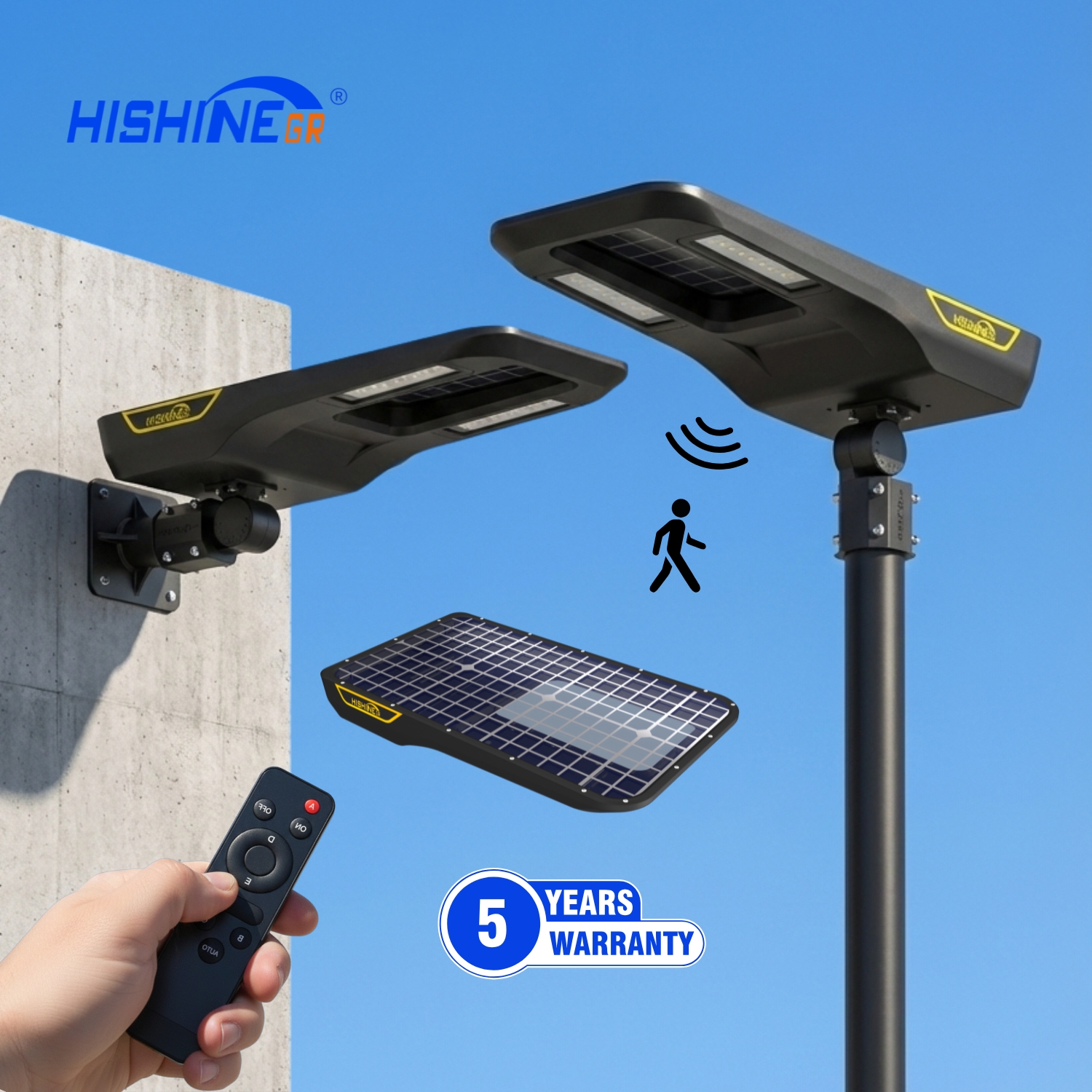
Confirm battery chemistry and capacity basis, temperature conditions, charge control, low-voltage protection, operating profile, monitoring, and replacement access.
A transparent energy calculation is more useful than a runtime slogan
For illustration, a load operating at 40 W for five hours and 15 W for seven hours uses 305 Wh per night before additional system losses. This is an arithmetic example, not a specification for your site. Convert the required autonomy into usable battery energy, then account for the selected battery technology, temperature, ageing and permitted depth of discharge. Check that expected panel production can both support normal nights and restore charge after a run of poor weather.
Product options for solar street lighting
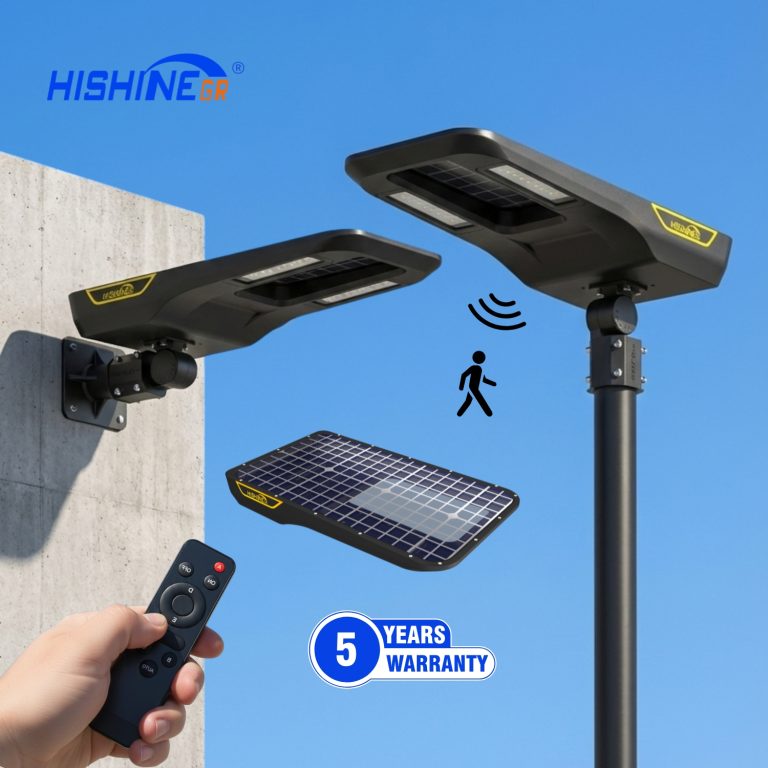
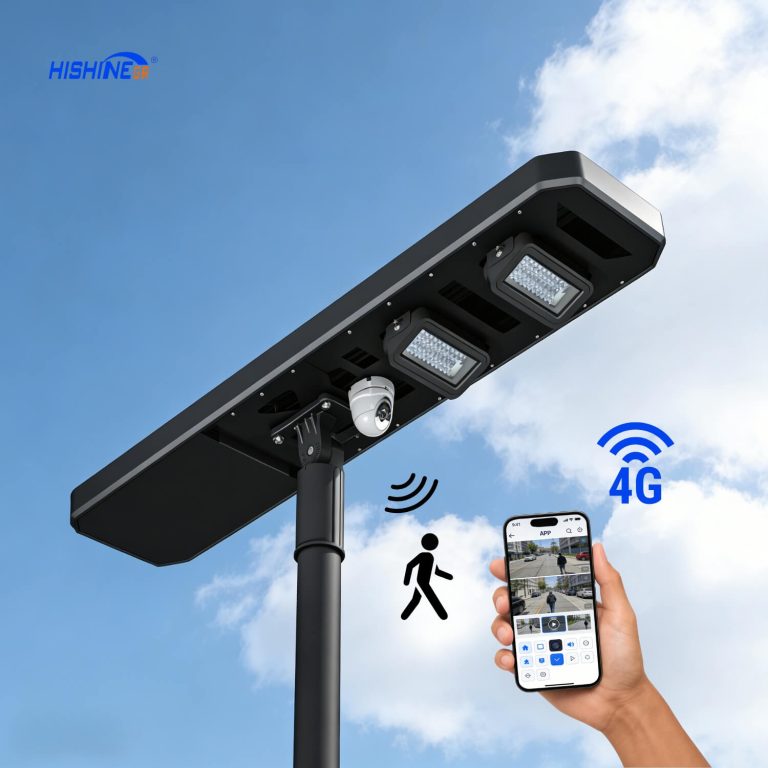
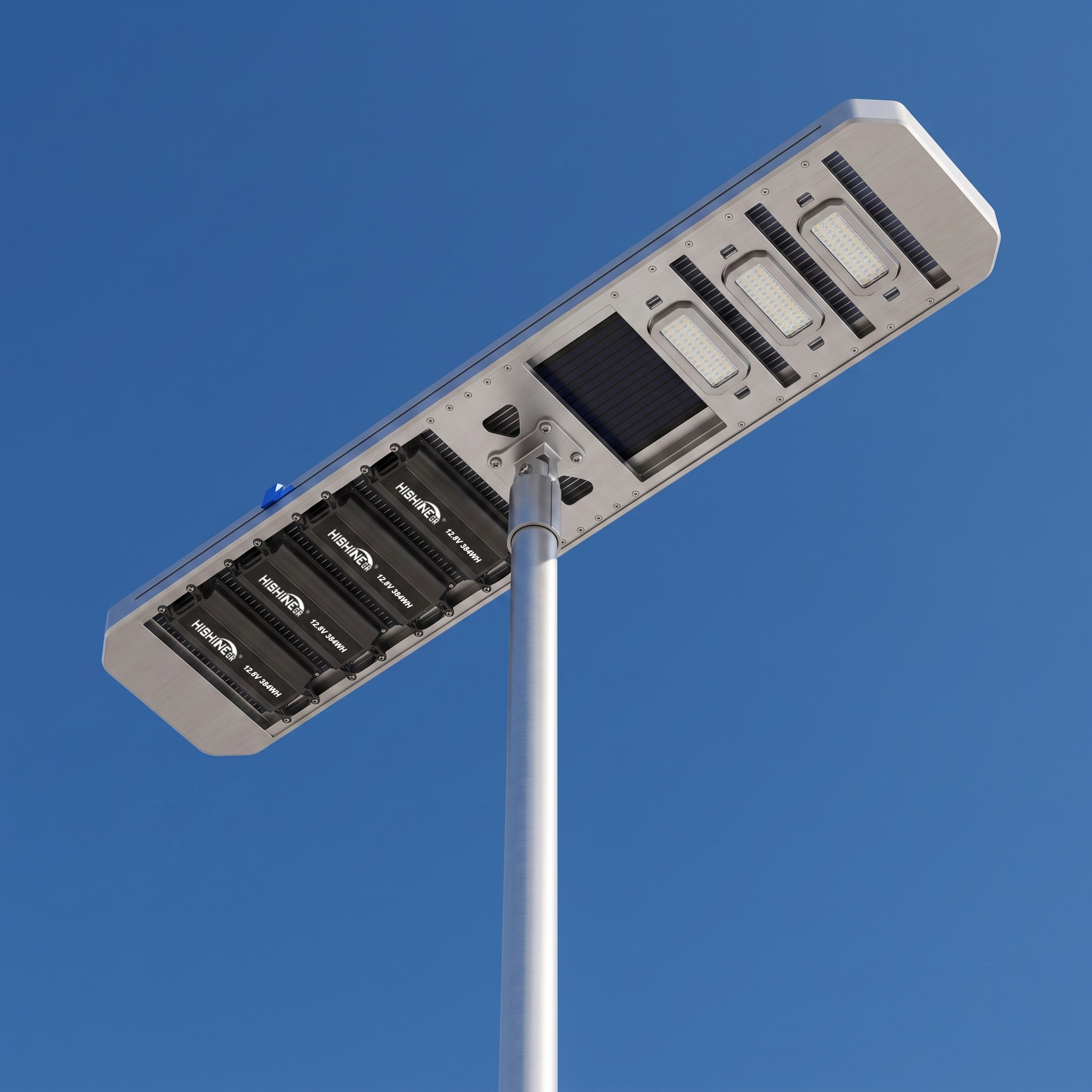
Evaluate Hishine E Series All-in-One Solar LED Street Light for an integrated solar street-light arrangement where solar access and the operating profile are suitable. Hishine H Series Auto-Cleaning Solar Street Light adds an auto-cleaning approach that may be relevant in dusty locations. Cleaning features do not replace the need to assess seasonal solar yield, shading, battery capacity and safe maintenance access.
Prepare the project brief and acceptance checks
Send coordinates or the project location, road geometry, proposed pole positions, shading photographs and the mandatory lighting schedule. Ask the proposal to state energy assumptions and the low-battery operating strategy. At commissioning, verify actual programming and log representative operation instead of judging performance only on installation night.