One indoor sports hall, several visual tasks
A multi-sport hall should be designed around the most demanding viewing directions in its actual activity schedule. A row that works for general exercise may distract a badminton player looking up for a shuttle or a volleyball player tracking a set. Overlay all court markings, goal positions and divider curtains before placing the fittings.
Indoor sports halls often serve basketball, volleyball, badminton, training, school activities, events, and cleaning within the same building. Players look upward, equipment moves, and roof services compete for space. A successful solution must balance sport-specific sight lines, floor and vertical visibility, impact awareness, controls, acoustics, and practical access.
Use the activity schedule as a design input
| Area or decision | Operational requirement | Design check |
|---|---|---|
| Badminton or volleyball | Frequent upward viewing | Review source positions above the active court |
| Basketball | Basket and backboard approaches | Model suspended equipment and supports |
| Split-hall lessons | Independent occupied halves | Calculate the curtain-down condition |
| Cleaning and events | Different hours and tasks | Provide clearly named operating scenes |
Overhead glare, roof shadows and changing equipment
Players see bright fittings overhead
Generic high-bay spacing can place intense luminaires in shuttlecock, ball, and shooting sight lines. Mounting and optical control should reflect the sports actually played.
Roof services create shadows or conflicts
Trusses, ducts, sprinklers, scoreboards, curtains, acoustic panels, and suspended equipment can block light or prevent safe installation if omitted from the model.
The hall wastes energy between bookings
One all-on circuit forces full output for cleaning, partial training, or a single court. Zoning, scheduling, and appropriate sensors can better match real use.
Access requires closing the facility
High ceilings and fixed seating may limit lift routes. Fixture location, driver serviceability, cleaning, and replacement access should be planned before installation.

Lay out the luminaires around the sports
Map sports and equipment layouts
Show court markings, nets, goals, hoops, curtains, scoreboards, seating, and principal viewing directions so the lighting responds to actual use.
Coordinate luminaires with the roof
Use reflected ceiling plans and sections to avoid obstruction, maintain clearances, and reserve practical access paths.
Select controlled distributions
Choose mounting height, spacing, and optics that support uniformity and vertical visibility while reducing direct glare during upward play.
Create intuitive operating zones
Group by court, activity, or daylight zone and provide scenes that staff can understand. Confirm sensor behavior, manual override, and event requirements.
Coordinate the roof before fixing the lighting grid
Mark trusses, ducts, acoustic panels, sprinklers, scoreboards and maintenance routes in both plan and section. Roof-mounted obstructions can redirect or block light, while hanging equipment can create shadows only visible in a particular sport configuration. Compare row locations before increasing output. Where daylight enters through glazing, discuss blinds and control behavior so users do not face large changes in contrast during a session.
Product options for indoor sports hall lighting & led selection
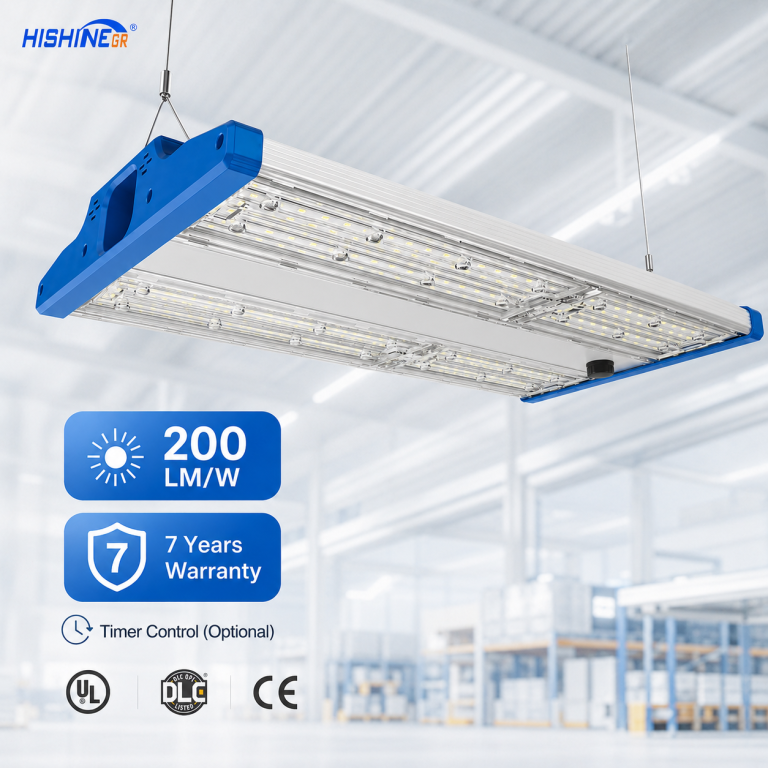
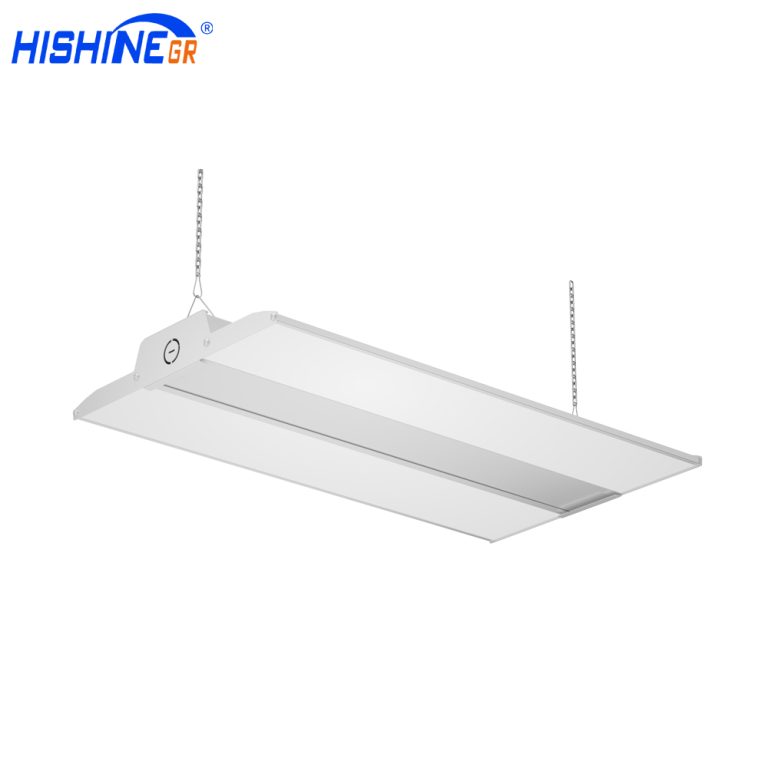
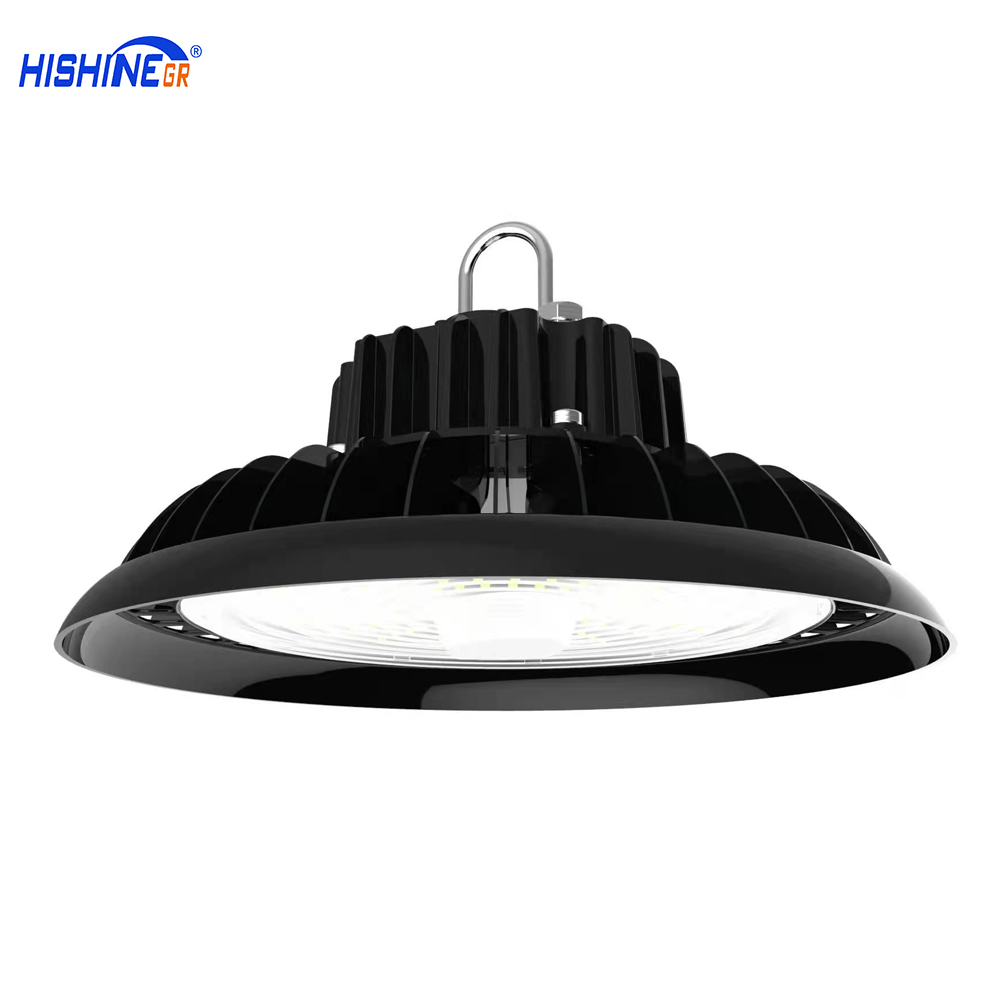
Compare a linear arrangement using Hishine K5 LED Linear High Bay Light with point-mounted Hishine H5 UFO LED High Bay Light fittings where roof geometry supports it. Confirm optical files, dimming compatibility and required ball-impact protection. A product listed for an indoor sports application still needs a layout-specific glare review; its industrial protection rating alone does not settle that question.
Prepare the project brief and acceptance checks
Test the booked-use scenes with sports equipment in position, then verify that staff can select them without changing technical settings. Record access arrangements for cleaning and replacement. Include roof sections, the full activity schedule, court overlays and impact requirements in the inquiry.