Industrial park roads carry more than ordinary traffic
Industrial park roads connect factories, warehouses, gates and staff routes. Long vehicles create different shadow patterns and turning movements from passenger cars. Bright loading doors can also make the adjoining road appear darker. Model the shared road network alongside representative tenant entrances so separate projects do not create conflicting light directions or poorly lit gaps at property lines.
Industrial park roads carry trucks, employee vehicles, forklifts at crossings, pedestrians, buses, and emergency traffic between gates, factories, warehouses, and loading zones. Road lighting must connect safely with bright indoor doors and yard areas, withstand industrial exposure, support cameras, and remain adaptable as plots and traffic patterns develop.
Review the network through a truck driver’s journey
| Area or decision | Operational requirement | Design check |
|---|---|---|
| Main access road | Heavy-vehicle circulation | Check lane width, pole setback and approach glare |
| Gate and queue | Stopped vehicles and document checks | Model a truck in the queue |
| Tenant frontage | Transitions from private plots | Coordinate door brightness and shared boundaries |
| Staff crossings | Pedestrians among large vehicles | Review views with trailers and parked vehicles present |
Truck shadows and abrupt changes at factory gates
Road and yard designs stop at different boundaries
Independent packages can create dark transitions or competing glare at gates, loading entrances, intersections, and warehouse doors.
Heavy vehicles conceal pedestrians
Truck size, turning paths, parked trailers, and loading activity create shadows and restricted sight lines. Crossings and gate areas need targeted vertical visibility.
Future plots change the network
New entrances, signs, trees, utility corridors, security fences, and traffic volumes can make fixed pole layouts inefficient or obstructed.
Industrial exposure is underestimated
Dust, vibration, corrosion, voltage disturbance, heavy traffic, and limited maintenance windows can affect reliability and cleaning.
Coordinate the road, gate and tenant frontage
Coordinate roads, gates, yards, and buildings
Use one site plan to review internal roads, intersections, crossings, loading interfaces, parking, perimeter zones, cameras, and emergency routes.
Design around heavy-vehicle sight lines
Model turns, gate approaches, trailer parking, building exits, and pedestrian crossings with controlled glare and useful vertical light.
Reserve infrastructure for expansion
Coordinate poles with utilities, drainage, trees, plot entrances, future roads, controls, and communications so later work does not require avoidable relocation.
Match protection and maintenance to the site
Confirm dust, corrosion, vibration, voltage, surge, operating hours, access, cleaning, spares, and outage response for each zone.
Leave a usable plan for the next tenant and construction phase
Future plots can change entrances, parking and delivery patterns. Keep a drawing of shared-road poles, circuits, optics and control groups so tenant fit-outs can be reviewed against it. Identify temporary access roads and the point at which they need a permanent scheme. Record responsibility for cleaning and repairs at property boundaries. When comparing procurement packages, include foundations, electrical work, access and replacement components rather than considering only the luminaire purchase price.
Product options for industrial park road lighting
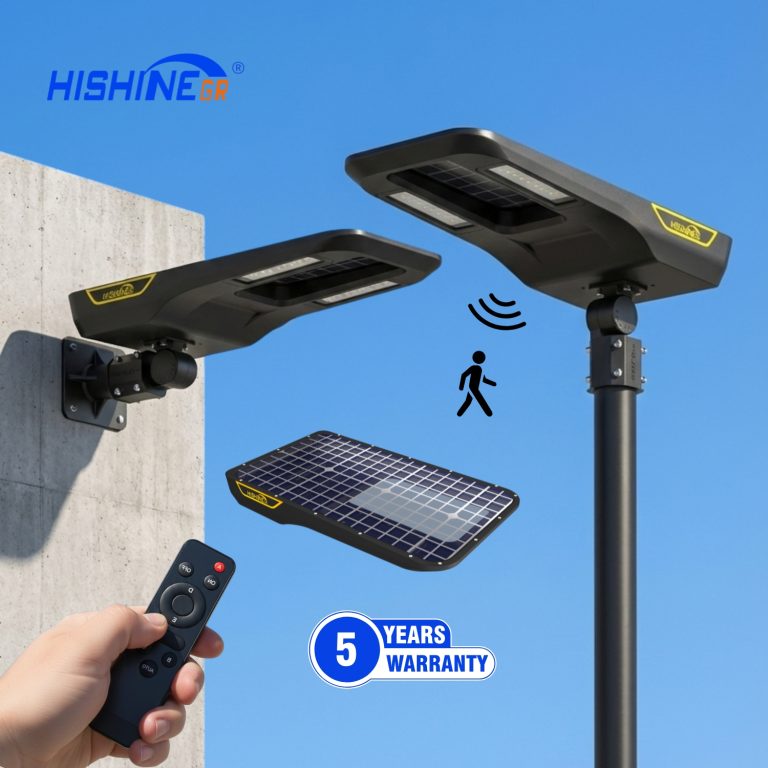
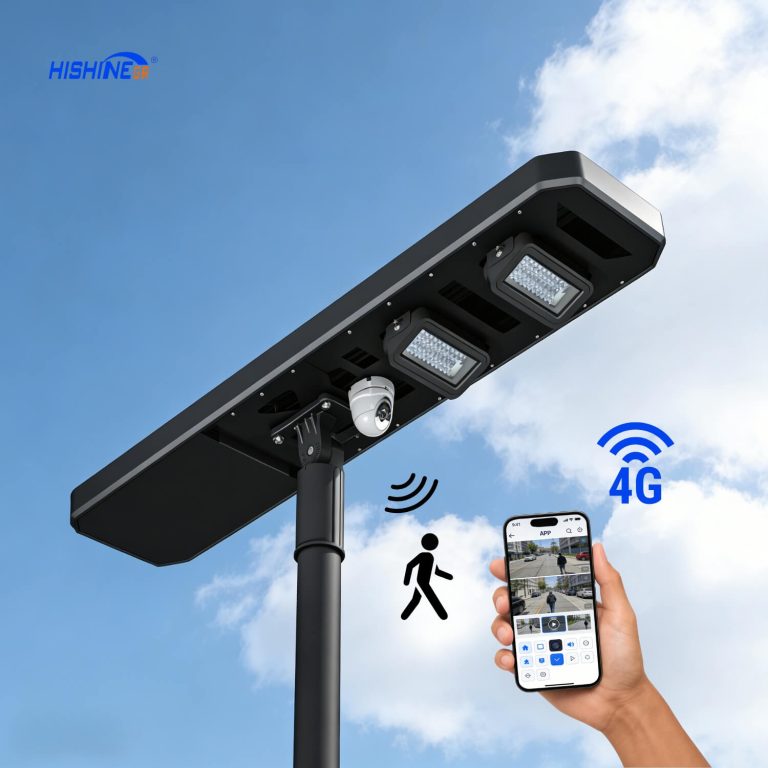
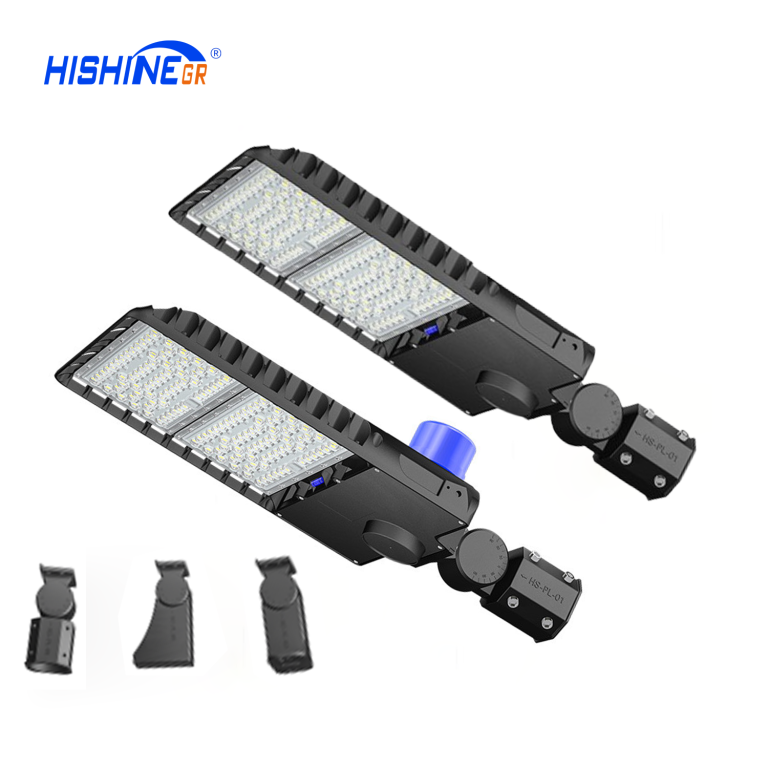
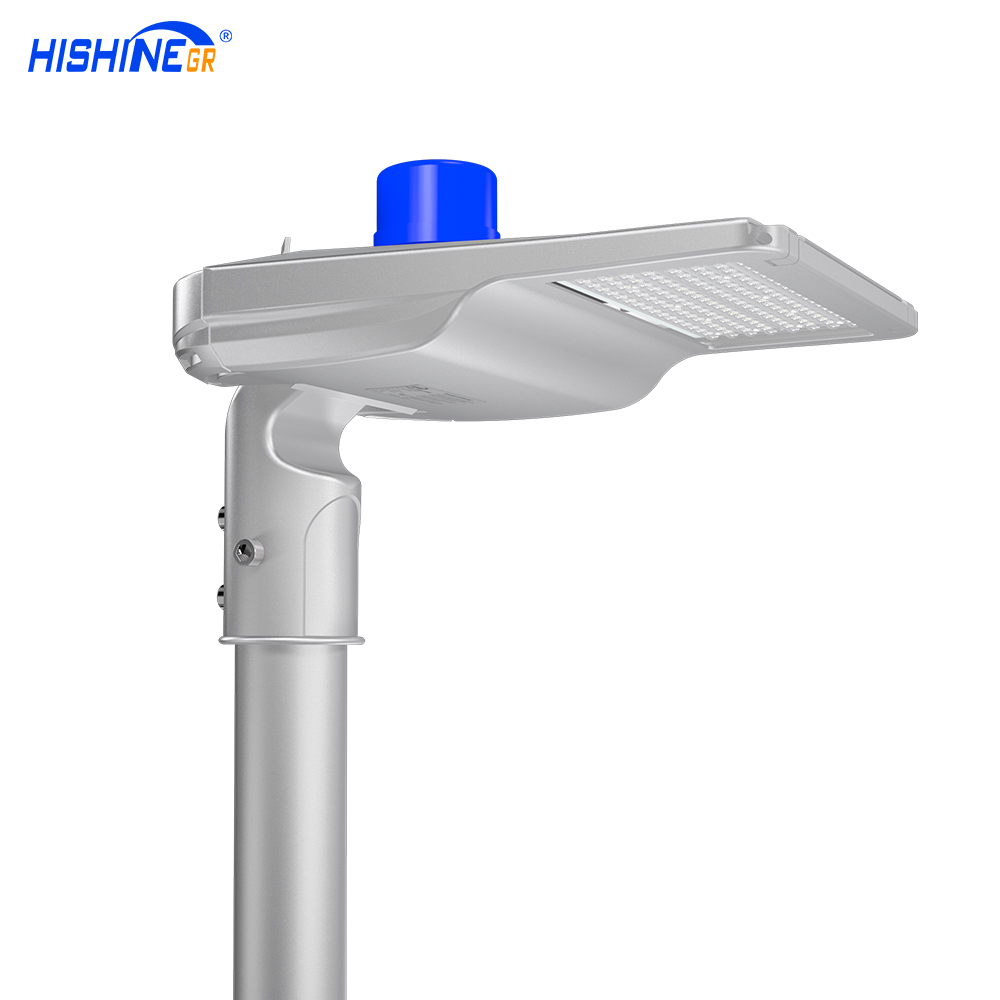
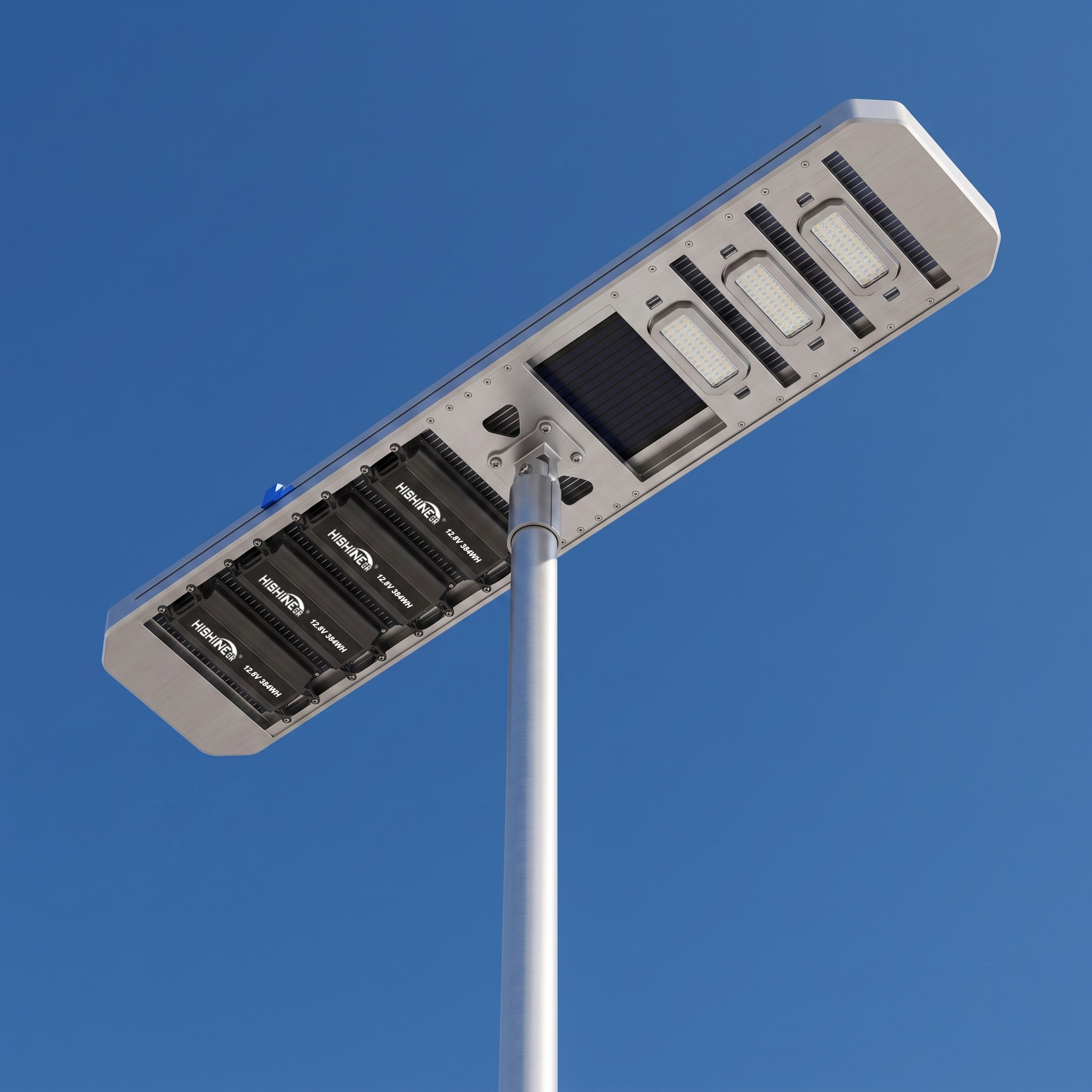
For a powered road network, compare Hishine Hi-Slim LED Street Light against the actual road geometry and control requirements. Hishine H Series Auto-Cleaning Solar Street Light may be evaluated for a suitable unshaded section where an independent energy system has a clear benefit. Solar and grid alternatives should be compared on service requirements and lifecycle assumptions, not simply on whether trenching can be avoided.
Prepare the project brief and acceptance checks
Provide the road network, truck turning envelopes, gate layouts, worker routes and planned plot development. Inspect representative gate transitions at night with vehicles present. Agree who maintains each asset and how future tenant changes trigger a review of the shared lighting.