Park lighting should connect useful night-time routes
A park does not need the same lighting treatment everywhere. Identify the routes that remain open after dark, entrances that need recognition, steps that need clear definition and places where visitors pause. Keep the planting plan in the model: a fitting that works beside a young tree may be shaded by a mature canopy. Coordinate ecological constraints with the landscape team rather than applying a universal colour-temperature recommendation.
Parks need enough light for orientation and personal comfort without turning every landscape into a uniformly bright open area. Paths, steps, entrances, play or gathering spaces, water edges, vegetation, wildlife, neighbors, and maintenance access create different priorities. The solution should use light selectively, preserve visual hierarchy, and coordinate the daytime appearance of equipment.
Use the evening route plan to set priorities
| Area or decision | Operational requirement | Design check |
|---|---|---|
| Primary paths | Recognise the route and other users | Review continuity, faces and glare |
| Steps and ramps | Read changes in level | Check shadows across edges and landings |
| Seating and entrances | Comfortable orientation | Avoid bright sources at seated eye level |
| Planting and habitat edges | Limit unnecessary exposure | Coordinate operating hours and spill-light limits |
Glare, tree growth and unnecessary light in planted areas
More brightness reduces comfort
Excessive contrast, exposed sources, or very bright pools can make adjacent areas feel darker and disturb nearby homes or ecological zones.
Trees change coverage over time
Canopies and seasonal foliage can block or redirect light. Pole and fixture positions should consider mature landscaping, pruning, roots, and maintenance access.
Path hazards are missed
Steps, ramps, intersections, edges, benches, and entrances may need more attention than a broad lawn. The calculation zones should follow how people move.
Solar fixtures are placed in shade
Parks often have trees and structures that limit charging. Solar suitability must be checked at the actual location and season, not assumed from open-site climate data.

Distinguish paths, steps, seating and park boundaries
Create a nighttime hierarchy
Identify primary and secondary paths, entrances, crossings, gathering areas, hazards, landscape accents, quiet zones, and areas intentionally left dark.
Control glare at pedestrian scale
Use mounting height, shielding, distribution, source position, and brightness that support faces and surfaces without placing harsh sources in normal views.
Coordinate with landscape and ecology
Review mature vegetation, roots, water, wildlife, color temperature preferences, curfew, spill boundaries, and the daytime appearance of poles and fixtures.
Choose maintainable power and controls
Compare grid and solar options, cable routes, schedules, sensors, panel shading, cleaning, vandalism, access, and replacement planning by zone.
Test the route as a visitor experiences it
Walk the proposed route in both directions and include the views from benches, ramps and nearby homes. A sequence of bright pools separated by dark gaps can feel uncomfortable even when the average value is adequate. Review mature vegetation, maintenance access and the consequences of a single fitting being out of service. Give operators a clear closing-time schedule and a controlled method for extending hours for an event. Decorative accents should remain subordinate to the functional route.
Product options for park lighting
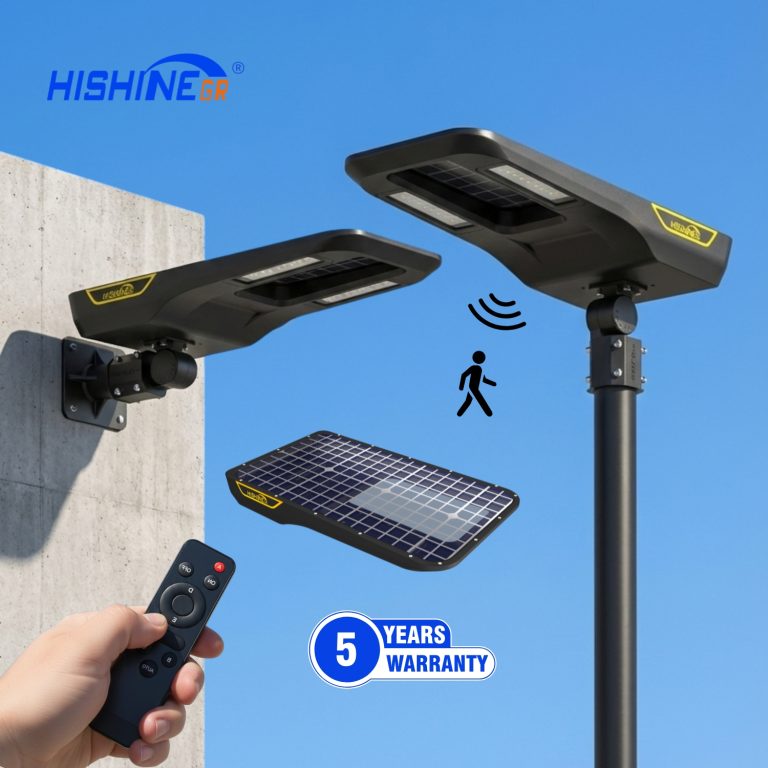
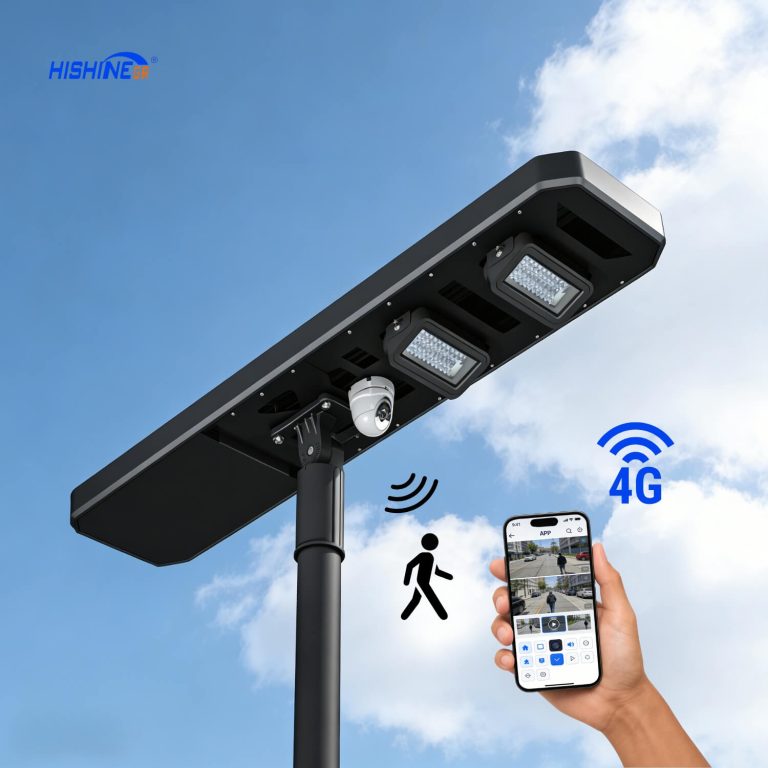
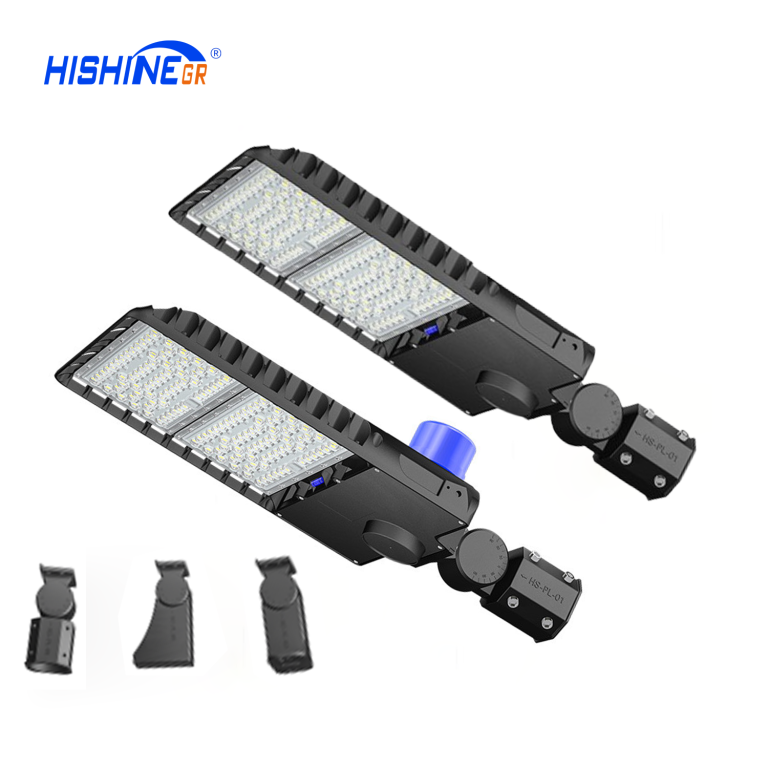
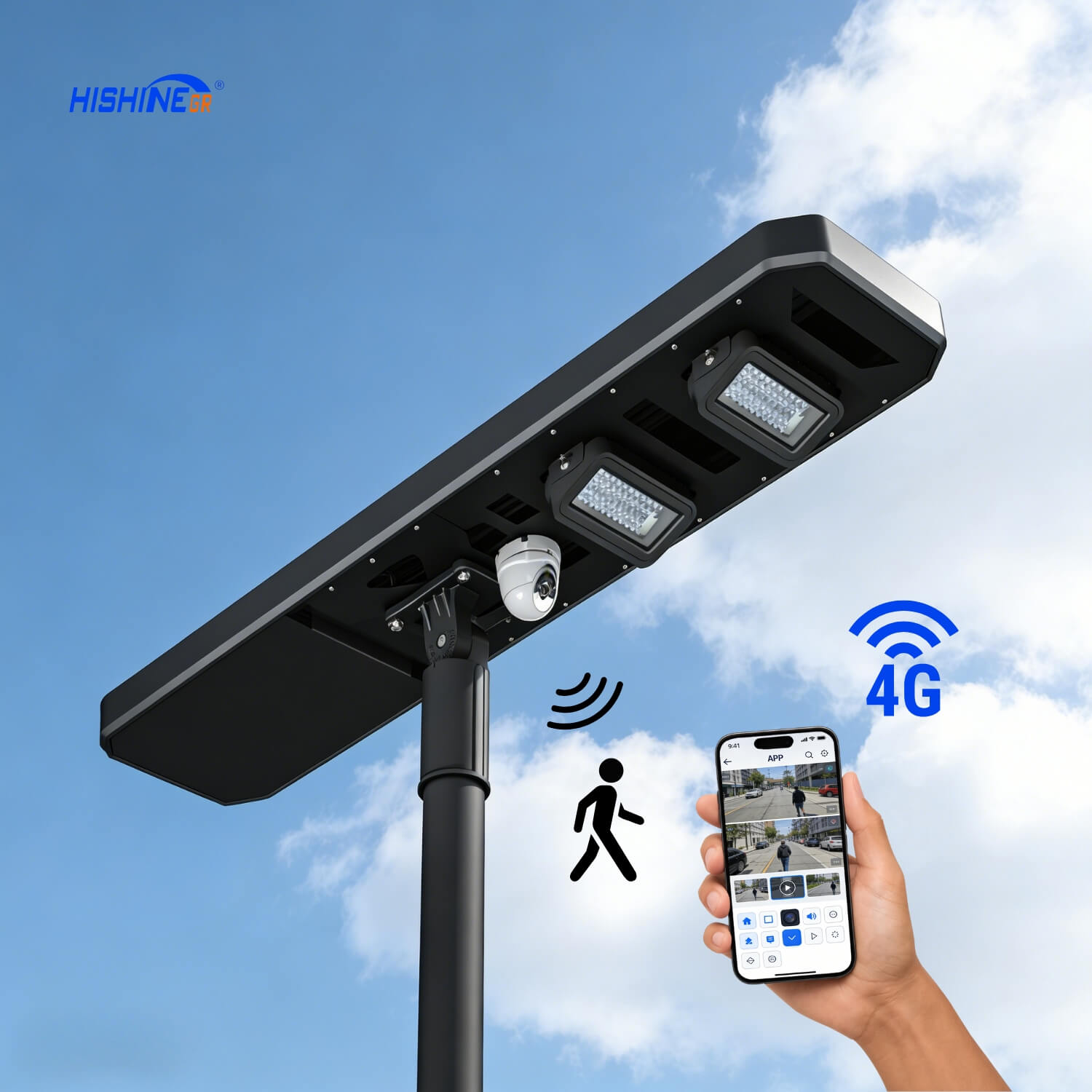
Hishine Hi-Guard LED Garden Light is a candidate for pedestrian-scale routes and gathering areas where its distribution and mounting suit the landscape. Hishine F Series All-in-One Solar LED Street Light may be considered for an unshaded route where cabling is difficult. A solar installation under dense canopy is not justified merely because the site is outdoors; check seasonal solar access and the required night-time schedule.
Prepare the project brief and acceptance checks
Supply a landscape plan with tree species or mature canopy sizes, opening hours, accessible routes, steps, seating and sensitive boundaries. Use a short trial section where appearance or glare is critical. Record the selected colour, optic and control settings for consistent later phases.