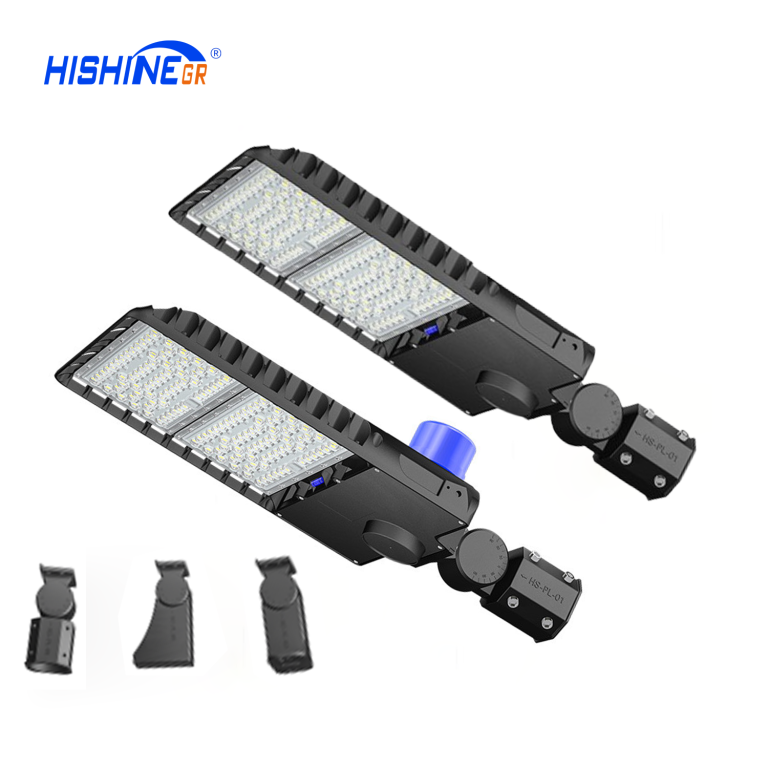
Parking lot lighting for people moving between vehicles
The useful test of a parking lot is not how bright it looks when empty. People need to see between vehicles, recognize approaching users and find entrances without looking into intense sources. Include the occupied parking pattern, pedestrian crossings, accessible bays and nearby windows in the model.
Parking lots must support drivers, pedestrians, cameras, accessible routes, entrances, payment or charging areas, and neighboring properties. High peak brightness under each pole does not guarantee safety. The design should create useful uniform visibility, control glare in driving directions, and coordinate poles with trees, islands, signage, utilities, and future changes.
Select the distribution by pole location
| Area or decision | Operational requirement | Design check |
|---|---|---|
| Perimeter pole | Direct useful light into the lot | Check backlight toward neighbors |
| Central island | Serve multiple parking rows | Evaluate broader coverage and vehicle shadows |
| Entrance and crossing | Support recognition and wayfinding | Check vertical visibility and signs |
| Late-night low occupancy | Reduce unnecessary energy | Retain a safe route to the occupied spaces |
Vehicle shadows, perimeter spill and camera exposure
Bright circles are separated by dark zones
One-for-one retrofits can preserve poor spacing and produce high maximums with weak minimums. Uniformity and transition between poles are more informative than the brightest point.
Pedestrians are visible too late
Floor illumination alone may not provide enough vertical light on people near vehicles, crossings, entrances, or accessible routes. Light direction and obstruction by parked cars matter.
Drivers look directly into fixtures
Pole locations at turns, ramps, and entrances can place luminaires in approaching sight lines. Tilt and uncontrolled high-angle light increase discomfort and spill.
Landscaping and site furniture block light
Trees, canopies, signs, chargers, cameras, and seasonal foliage can change coverage. The current and planned site layout must be included.
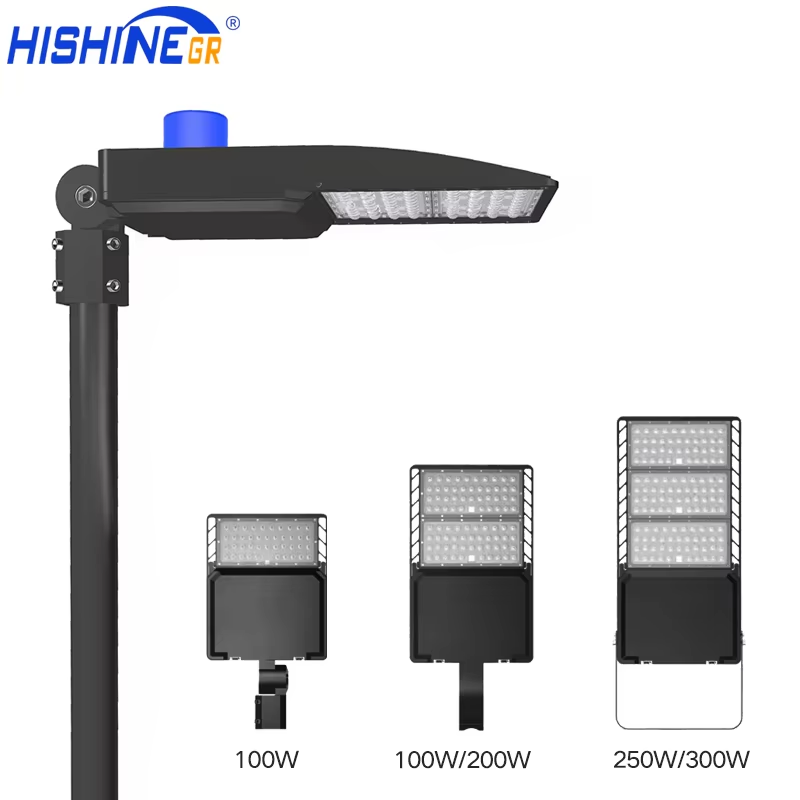
Match pole positions to parking and walking routes
Define traffic and pedestrian zones
Separate drive aisles, stalls, crossings, sidewalks, entrances, accessible routes, loading, and security areas so each receives appropriate attention.
Optimize poles before increasing output
Review height, spacing, islands, setbacks, utilities, and obstructions. Better geometry and optics can improve minimums without excessive wattage.
Check boundary and driver glare
Evaluate sensitive property lines, nearby roads, windows, and common vehicle approaches. Use appropriate distributions, shielding, and tilt limits.
Use scheduled or adaptive controls carefully
Dimming can save energy during low occupancy, but safe minimum levels, cameras, late staff, sensor behavior, and emergency override must be agreed.
Retrofit without creating a brighter glare problem
Record existing pole height, arm geometry, mounting interface and the location of nearby façades. A one-for-one LED conversion can reduce connected load while changing the distribution substantially. Compare the occupied parking area and pedestrian views before retaining every position. Ask for the proposed control settings and the behavior after a power interruption, especially where cameras or security patrols depend on a stable background level.
Product options for parking lot lighting design & led options
Compare the Type III, IV and V choices listed for Hishine Hi-Talent LED Parking Lot Light against the pole locations. Hishine Hi-Sun LED Parking Lot Light is another candidate where its road-oriented distributions match the bays and drive aisles. Use exact photometric files to compare the perimeter spill and minimum values; labels such as “parking lot light” do not define the correct beam for every position.
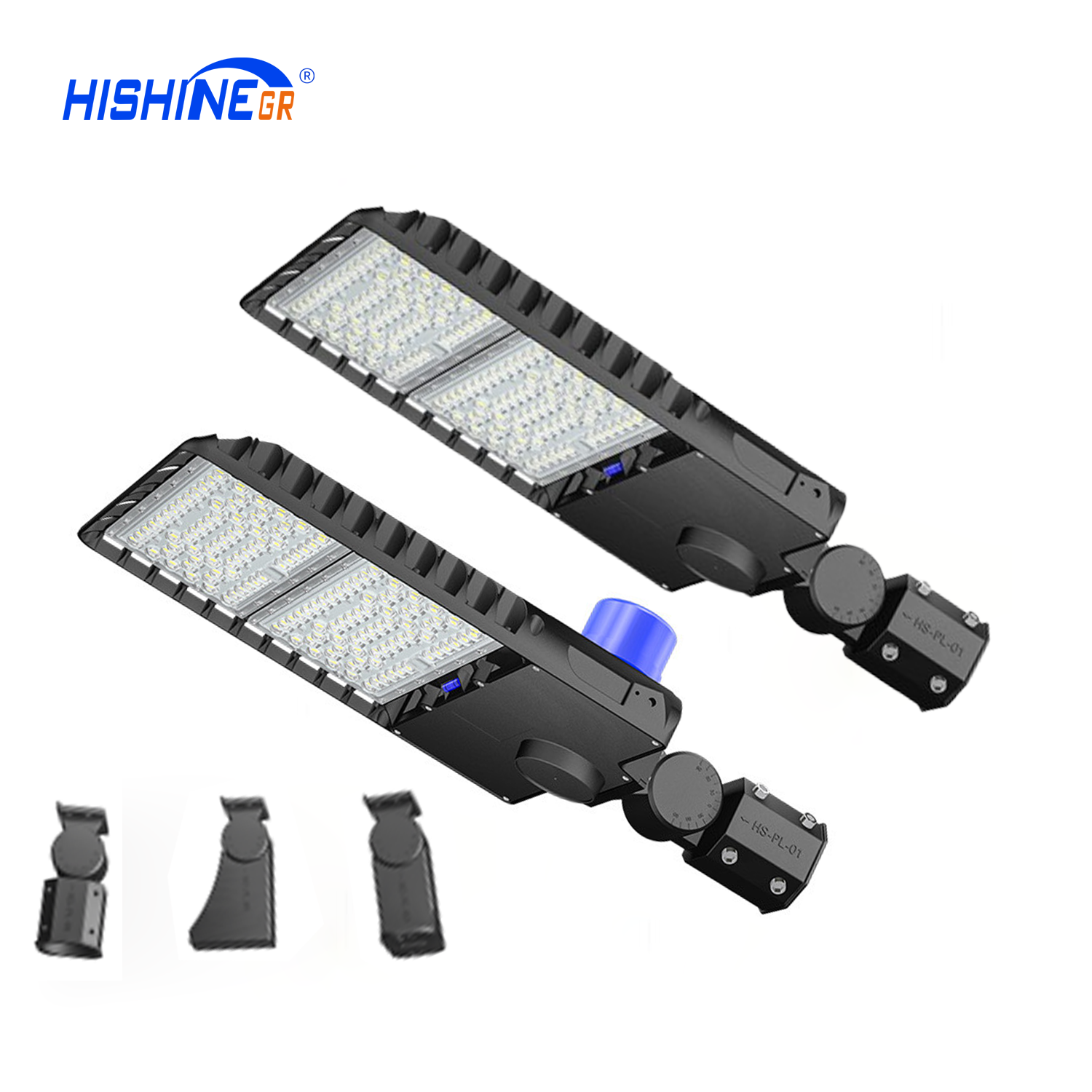
Prepare the project brief and acceptance checks
At acceptance, review the route from representative bays to the entrance and inspect the property boundary after dark. Test occupancy detection where parked vehicles can obstruct sensors. Supply the bay layout, pole survey, operating hours and camera positions to receive a product and optical recommendation tied to the lot.