A soccer pitch that stays readable from goal to goal
A community training pitch, a club competition ground and a broadcast venue need different design briefs. Confirm the intended governing requirements before comparing suppliers. The same pitch dimensions do not mean the same output or pole arrangement, and a headline average lux value does not show whether a goalkeeper can see a cross against a bright luminaire.
Soccer players continuously scan across and along a large pitch while the ball travels at ground level and through the air. Officials, goalkeepers, spectators, and cameras have different viewing directions. The solution therefore has to balance horizontal coverage, useful vertical light, glare control, boundary restrictions, and realistic pole geometry over the entire field.
Pitch areas that deserve separate review
| Area or decision | Operational requirement | Design check |
|---|---|---|
| Goal mouths and corners | Check local minimums and goalkeeper views | Avoid relying on a center-pitch average |
| Touchline run-off | Include the usable safety margin | Coordinate with fencing and nearby spectators |
| Shared training areas | Separate the operating groups | Allow partial use without dark active zones |
| Residential boundary | Review spill and visible light sources | Include agreed curfew and dimming scenes |
Goalkeeper sight lines and neighborhood boundaries
Good average, poor goal-area minimums
A calculation can report an acceptable average while penalty areas, corners, or touchline strips remain weak. Minimum values and uniformity must be reviewed on the correct calculation grid.
Cross-field glare affects play
Players frequently look toward opposite goals or follow a high ball. Low mounting heights, steep aiming, or concentrated beams can put high luminance sources directly behind the action.
Spill light creates neighbor complaints
Community fields often sit near homes, roads, or other sports areas. Uncontrolled rear light and high-angle output can create nuisance even when the pitch itself meets the target.
Future competition use is overlooked
A training-only brief may later expand to league matches or video coverage. Vertical illuminance, flicker, color quality, redundancy, and controls should be recorded as current or future requirements.
Build the pitch layout around the level of play
Define the playing level and use case
Confirm whether the pitch is for recreation, training, competition, or camera coverage. Use the applicable owner or local criteria instead of copying a generic lux target.
Model the actual pole layout
Include pole setback, height, available crossarms, nearby structures, and service access. The most efficient optical plan depends on real mounting geometry.
Balance horizontal and vertical visibility
Review pitch uniformity together with light reaching players and the ball from useful directions. Camera positions require separate attention when recording is planned.
Control light beyond the touchline
Use optics, shielding, tilt limits, and aiming to reduce wasted light at property boundaries and sensitive roads without sacrificing corner coverage.
Choosing between a new layout and existing poles
For a retrofit, compare an option using the surveyed poles with an option that changes mounting geometry. Report differences in coverage, glare risk, structural work and installed cost. If poles sit close to a goal line or behind a viewing position, beam changes alone may not resolve the conflict. Record the accepted compromise before ordering. On a multi-pitch site, model neighboring pitches together because their light can affect both the calculation and the player experience.
Product options for soccer field lighting & led pitch design
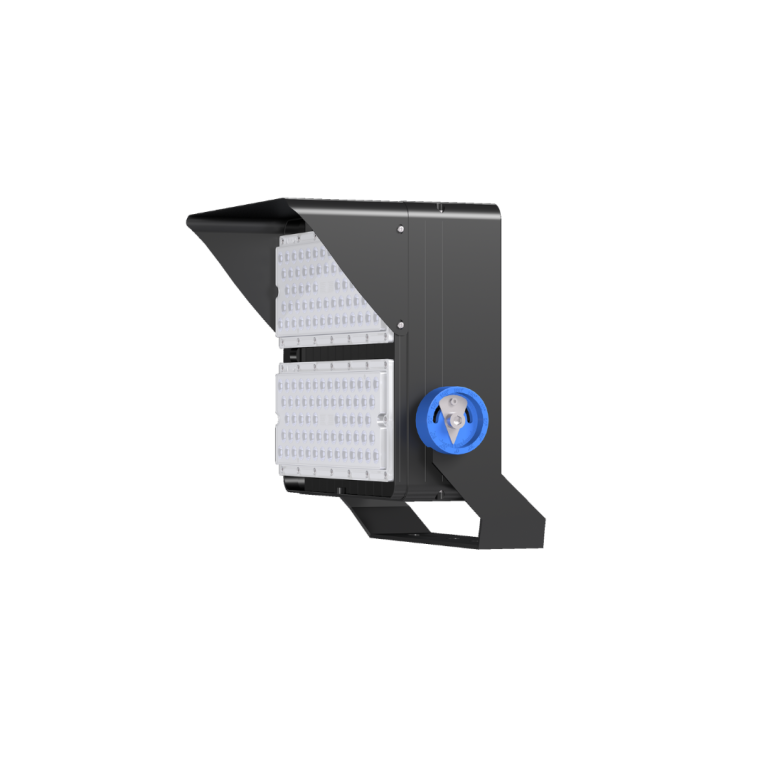
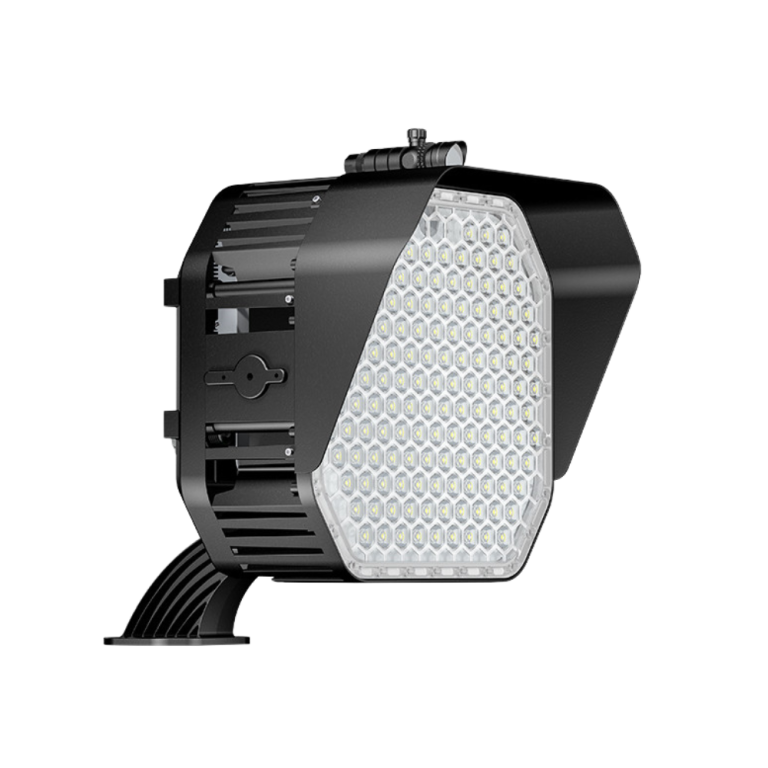
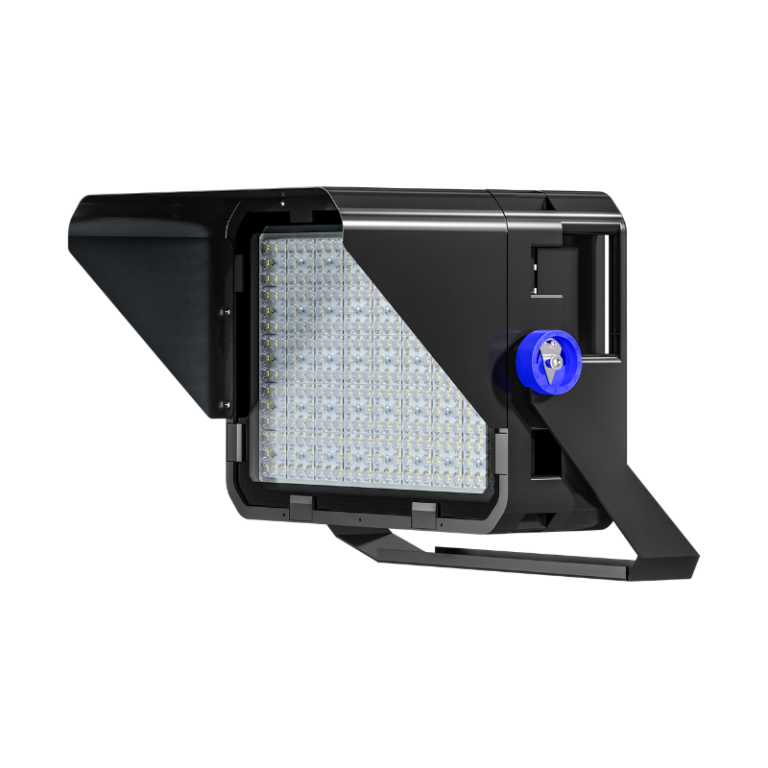
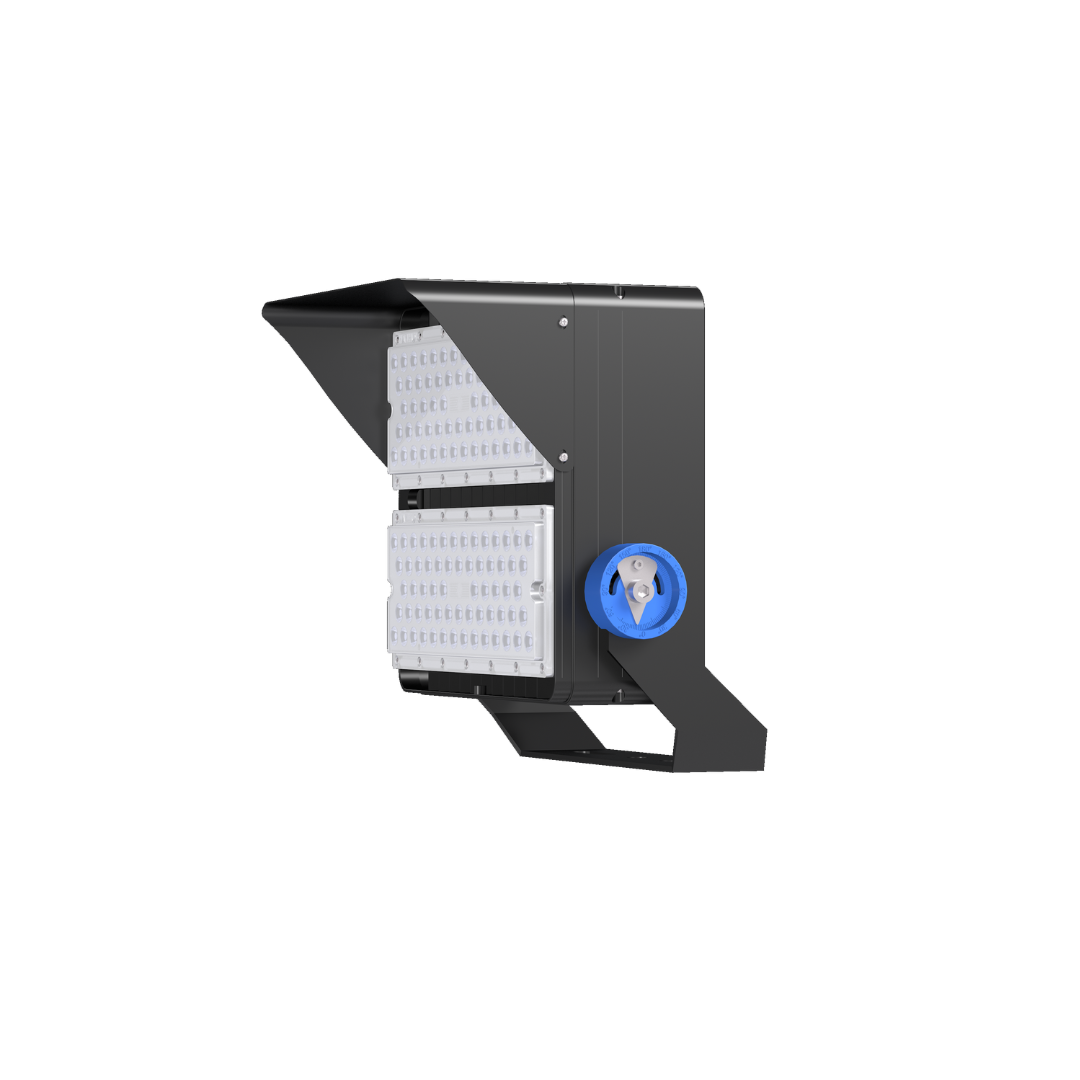
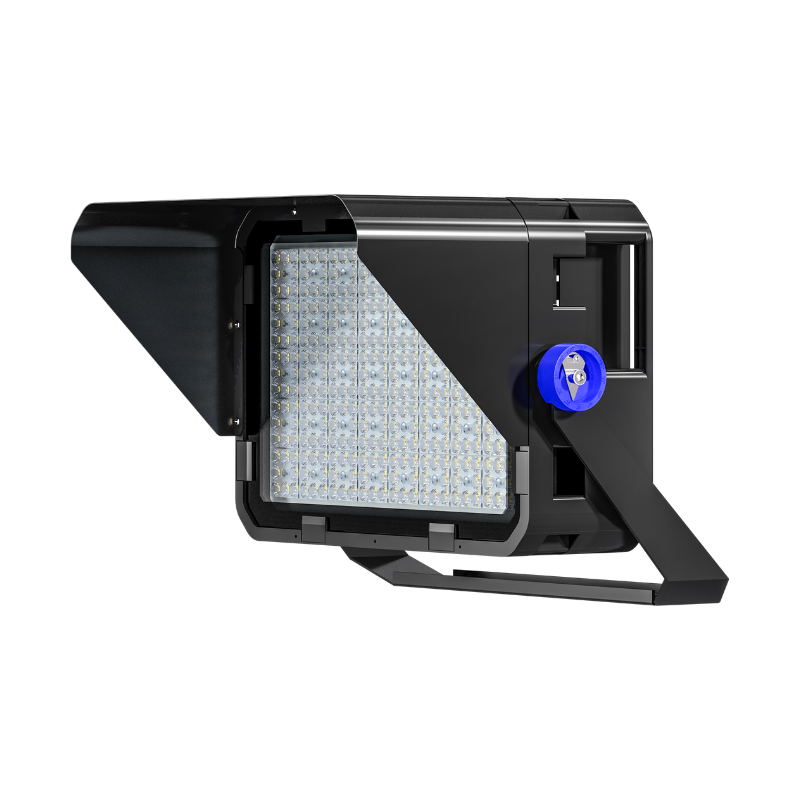
Hishine Hi-Flood LED Stadium Light is a candidate for an outdoor pitch where its available distributions match the throw distances. Compare Hishine Hi-Titan LED Stadium Light when a broader configuration choice is needed. Ask for a side-by-side layout using the same pitch boundary, maintenance assumptions and performance criteria; a higher-power proposal is not automatically the better design.
Prepare the project brief and acceptance checks
During commissioning, verify each aiming direction against the drawing, test the training and match scenes, and inspect the boundary from outside the facility. Keep a record of the installed lens and driver configuration. For a design review, provide pitch dimensions, run-off areas, pole coordinates, neighboring properties and whether cameras will be used.