Light the warehouse tasks, not just the empty floor
An empty warehouse calculation can look uniform while a stocked facility remains difficult to work in. Model the planned racks, their height and aisle width, then locate the visual tasks: reading labels, scanning cartons, inspecting goods and operating forklifts. Put task-specific calculation surfaces at the points where people actually need to see.
Warehouses combine open floors, tall racks, narrow aisles, labels, scanners, forklifts, loading doors, and changing inventory. A floor-only calculation can miss the vertical surfaces workers actually read. The solution should match distribution to the storage layout, coordinate controls with traffic, and reduce maintenance without creating glare for forklift operators.
Match the distribution to each warehouse zone
| Area or decision | Operational requirement | Design check |
|---|---|---|
| Tall rack aisles | Light along the aisle and onto rack faces | Evaluate vertical surfaces at several rack levels |
| Open storage | Cover changing floor positions | Compare wider distributions without excessive glare |
| Packing benches | Support labels and inspection | Check the working plane and operator shadows |
| Loading doors | Manage indoor/outdoor contrast | Review the approach with a vehicle at the dock |
Picking accuracy, rack shadows and forklift sight lines
Rack faces remain dark
Wide distributions may produce an acceptable floor average while labels and products on vertical rack faces receive little useful light. Aisle optics and vertical calculations may be necessary.
Forklift operators experience glare
Bright high bays viewed along long aisles can reduce comfort and contrast. Mounting height, spacing, distribution, source luminance, and operator direction need coordinated review.
Sensors switch at the wrong time
Poorly located sensors may miss slow activity, detect movement across adjacent aisles, or leave workers in abrupt transitions. Coverage, delay, dim level, and override must suit operations.
Layout changes make the system inefficient
Future racks, mezzanines, conveyors, or open storage can alter the required distribution. The design should record current assumptions and allow sensible zoning or adaptation.
Aisle, packing and loading zones need different optics
Separate aisles and open areas
Use different calculation zones and, where appropriate, different optics for narrow racks, open storage, picking, packing, staging, and loading.
Check useful vertical visibility
Evaluate rack faces, labels, and task surfaces in addition to the floor. Confirm the actual working height and viewing direction.
Coordinate controls with material flow
Map occupancy, shift patterns, daylight at doors or skylights, safe minimum levels, and manual override before sensors are specified.
Plan cleaning and access
Record dust conditions, lift routes, rack obstruction, isolation, driver access, and operating hours so maintenance does not become an unexpected shutdown.
Make the energy estimate reflect real shifts
Separate connected load from actual operating energy. For each zone, record the number of fittings, input power, occupied hours and expected dimmed hours. Include the sensor’s standby level and delay rather than assuming lights will be off whenever a forklift leaves. A pilot aisle should test slow picking activity, cross-aisle triggering and manual override before the same settings are copied across the warehouse. Keep safe occupied routes lit and coordinate emergency lighting as a separate requirement.
Product options for warehouse lighting: racks, aisles & high bays
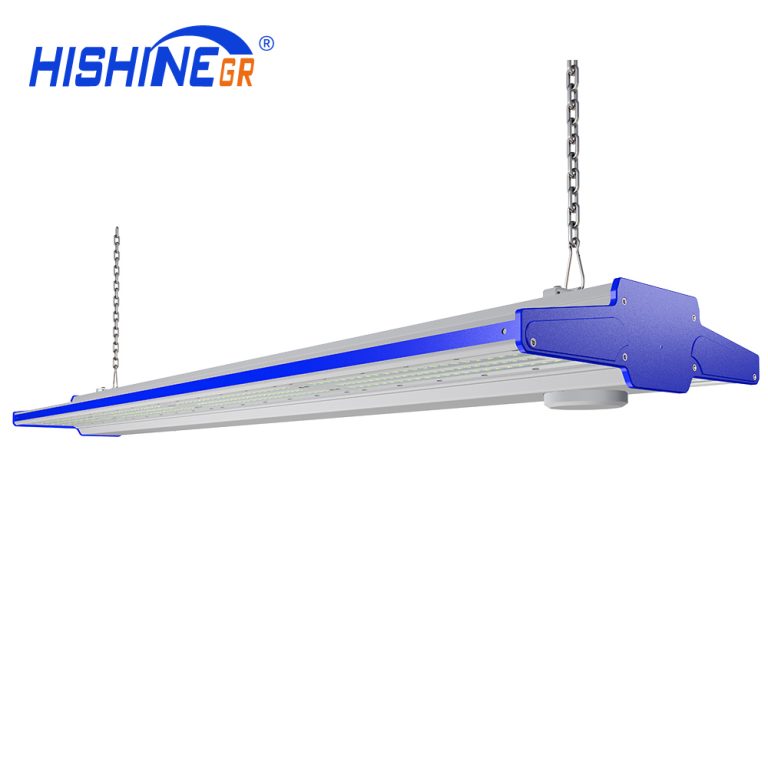
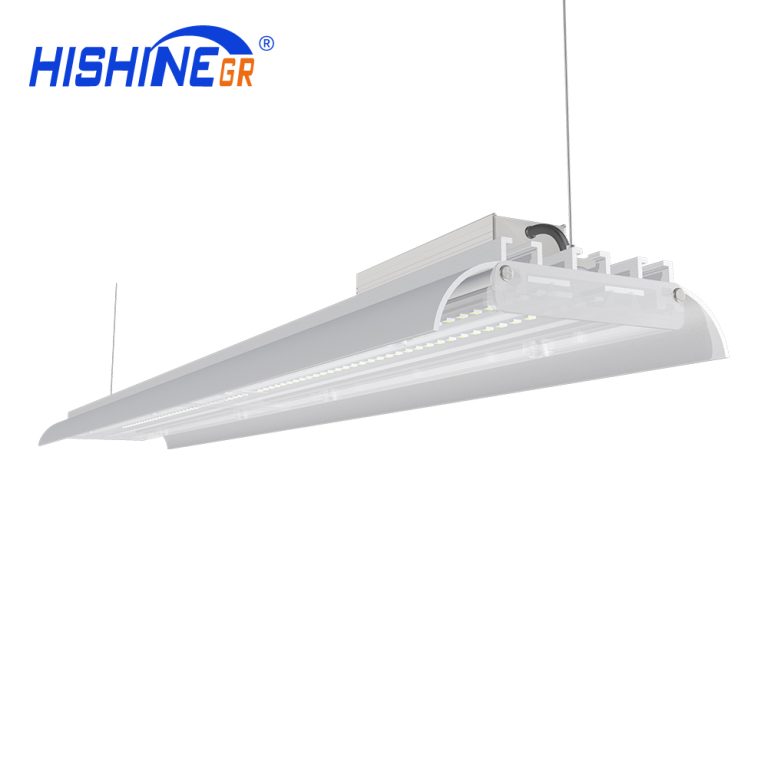
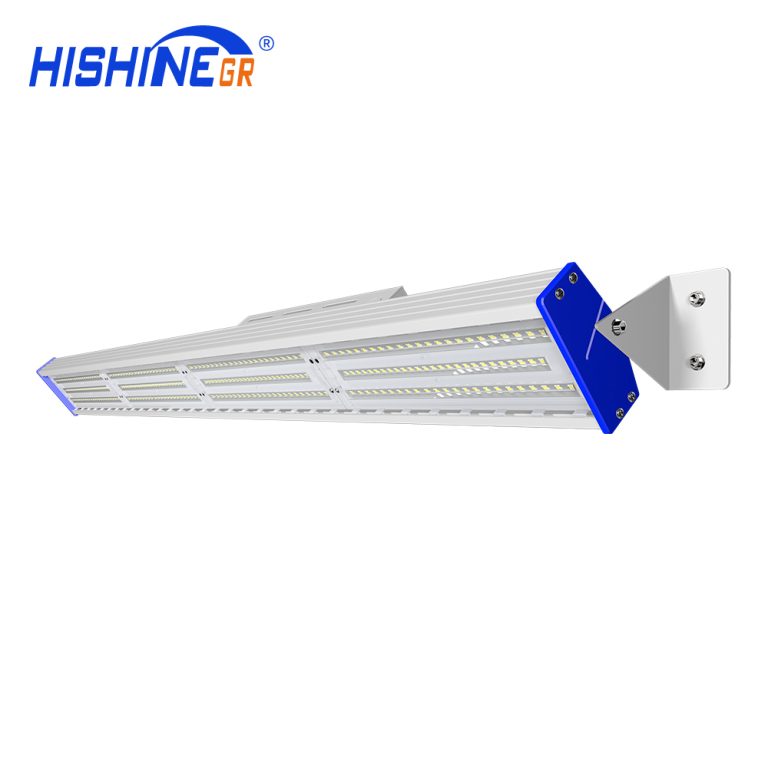
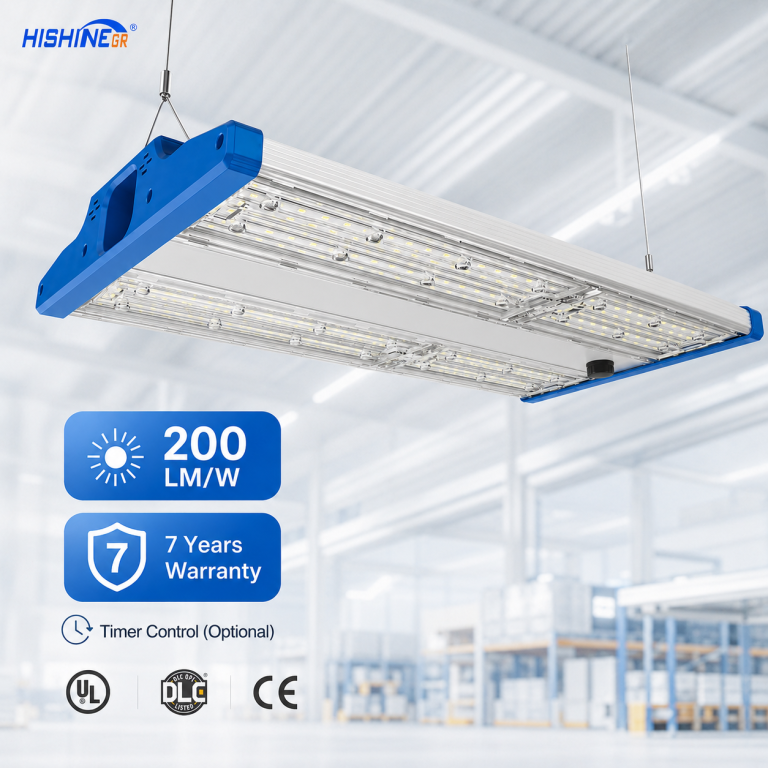
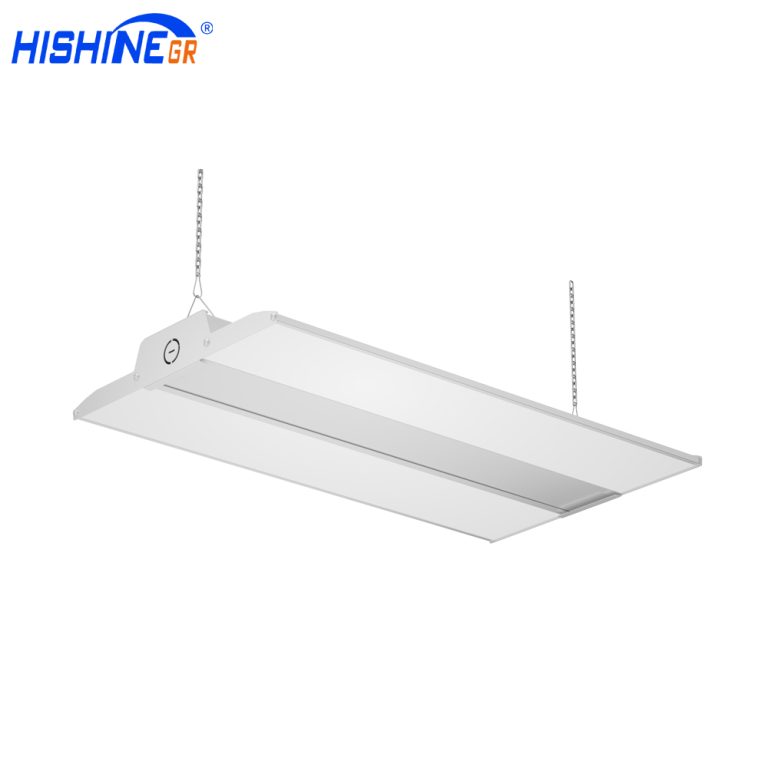
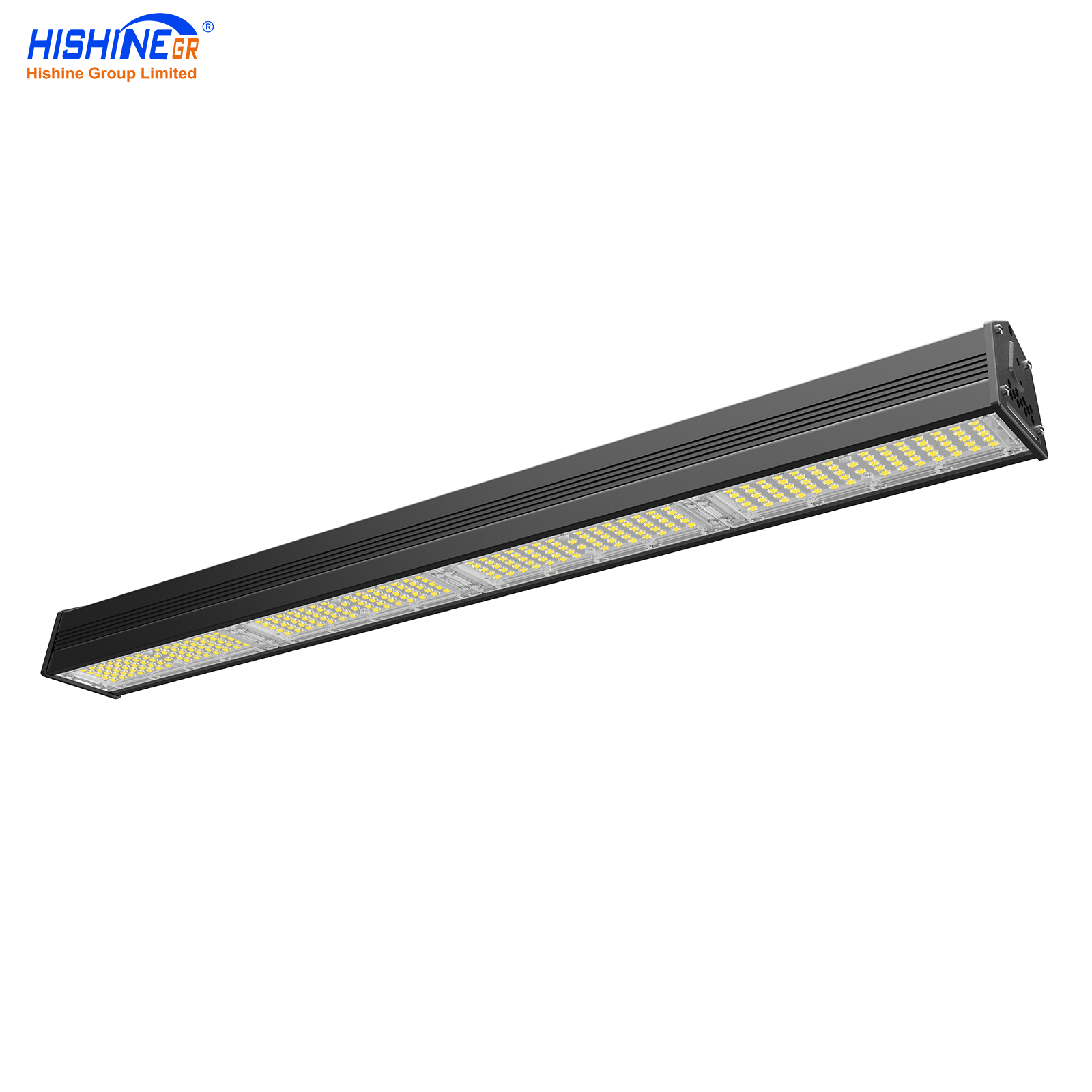
Hishine K11 LED Linear High Bay Light is worth evaluating for its range of distributions, including elongated optical options that can be compared against aisle geometry. Hishine K5 LED Linear High Bay Light offers another linear high-bay route for open and task areas. Ask for a calculation with racks included before choosing between them; a long housing does not by itself guarantee suitable aisle illumination.

Prepare the project brief and acceptance checks
For a retrofit proposal, supply a rack plan, ceiling sections, shift schedule and current circuit layout. Compare reuse of existing mounting points with a revised layout. At handover, test rack-label visibility with stock in place, walk the sensor zones and record the final dimming settings so future rack changes can be reviewed.