Security lighting must support the task and the camera
Define what the security team needs to see: movement at a boundary, a person at a gate, or identifying detail at a controlled entrance. These are different tasks. Establish camera positions, fields of view and operating modes before placing high-output lights. A brighter scene does not automatically provide a clearer recording, and lighting alone cannot guarantee prevention of crime or an identification outcome.
Security lighting supports detection, recognition, camera imaging, patrols, access control, and safe response. More brightness is not automatically better: uncontrolled sources can silhouette people, blind cameras, create hard shadows, and advertise gaps. The design should coordinate human sight lines, camera positions and settings, perimeter geometry, operating states, and power reliability.
Define the observation task at each location
| Area or decision | Operational requirement | Design check |
|---|---|---|
| Perimeter route | Detect movement and support patrols | Review shadow pockets and outward glare |
| Vehicle gate | Observe approaching vehicles and occupants | Coordinate light direction with camera exposure |
| Pedestrian entrance | See faces at a known position | Check vertical light without harsh backlighting |
| Equipment or storage area | Observe access around obstructions | Test with normal stored materials in place |
More light can make the camera image worse
Cameras see glare instead of detail
A luminaire inside or near the camera view can cause flare or force exposure changes that darken faces, plates, and backgrounds.
Fences and vehicles create shadow corridors
Perimeter fabric, containers, parked vehicles, vegetation, buildings, and terrain can block light. An empty-site plan does not reveal all vulnerable zones.
Bright foregrounds hide dark backgrounds
Extreme contrast can reduce recognition beyond a gate or checkpoint. Balanced vertical and background light is often more useful than a high local maximum.
A power or control fault removes the whole zone
Circuit grouping, emergency supply, solar autonomy, fail states, monitoring, and manual override should reflect the security consequence of an outage.
Coordinate human observation, CCTV and access points
Define security tasks by location
Separate detection, recognition, identification, patrol, gate processing, vehicle inspection, perimeter, camera, and emergency-response requirements.
Coordinate light and camera geometry
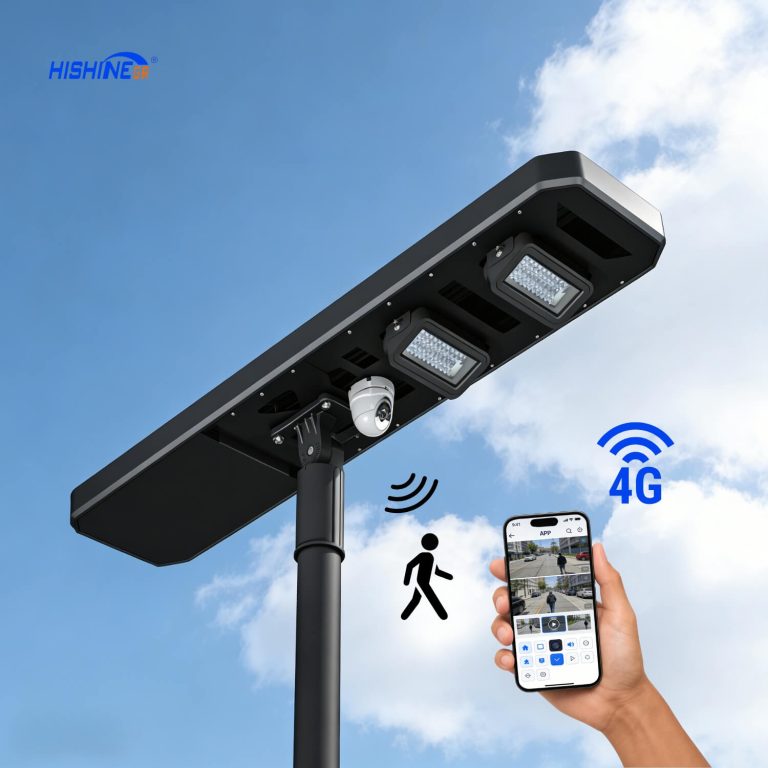
Review camera direction, field of view, mounting, infrared use, exposure, faces, plates, gates, fences, and possible glare sources together.
Reduce shadows and excessive contrast
Use appropriate mounting and light from useful directions, manage obstructions, and avoid isolated hot spots that make adjacent areas harder to see.
Design for reliable operating states
Document schedules, sensors, alarms, emergency power, solar behavior, communications, monitoring, manual override, and the response to failed devices.
Commission the lighting and cameras together
Review live and recorded images after dark with representative people and vehicles moving through the scene. Check overexposure, deep shadows, reflections from wet surfaces and the transition between lit and unlit areas. Coordinate dimming or motion boosts with the camera’s exposure response so sudden changes do not obscure the event being recorded. Document approved settings for both systems. Where plate capture or other specialised imaging is required, involve the camera supplier rather than assuming general area lighting can fulfil that role.
Product options for security areas
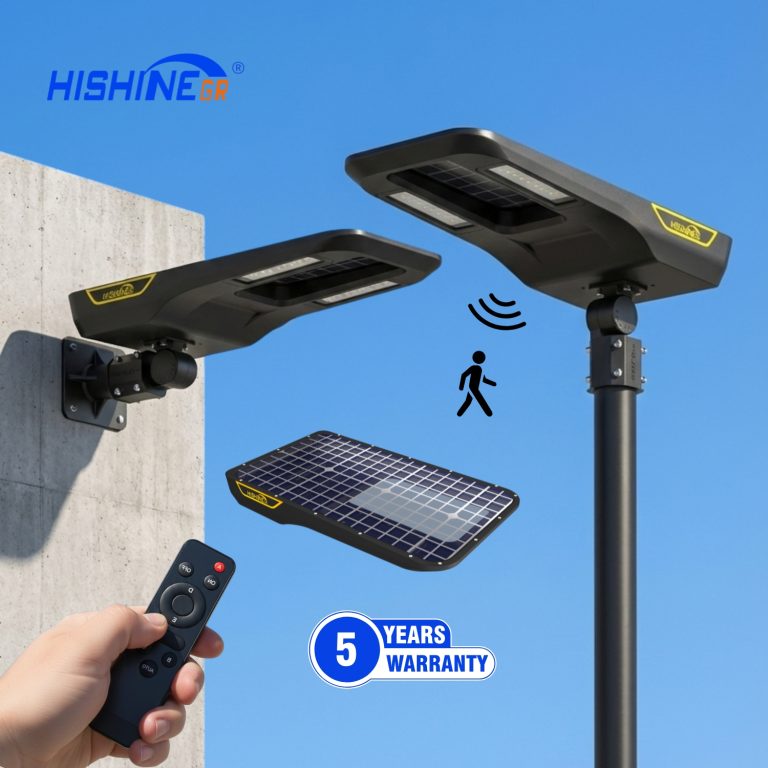
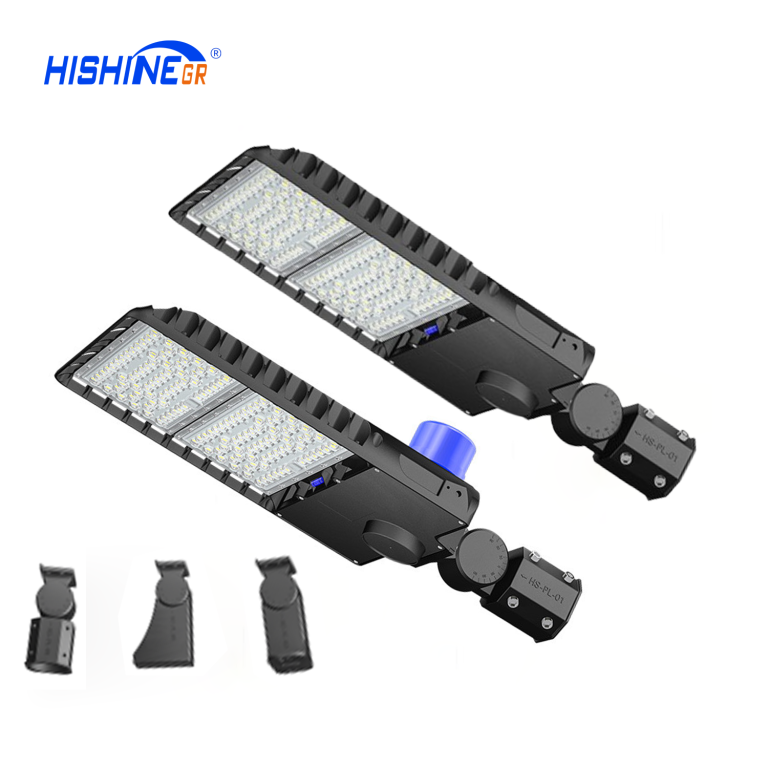
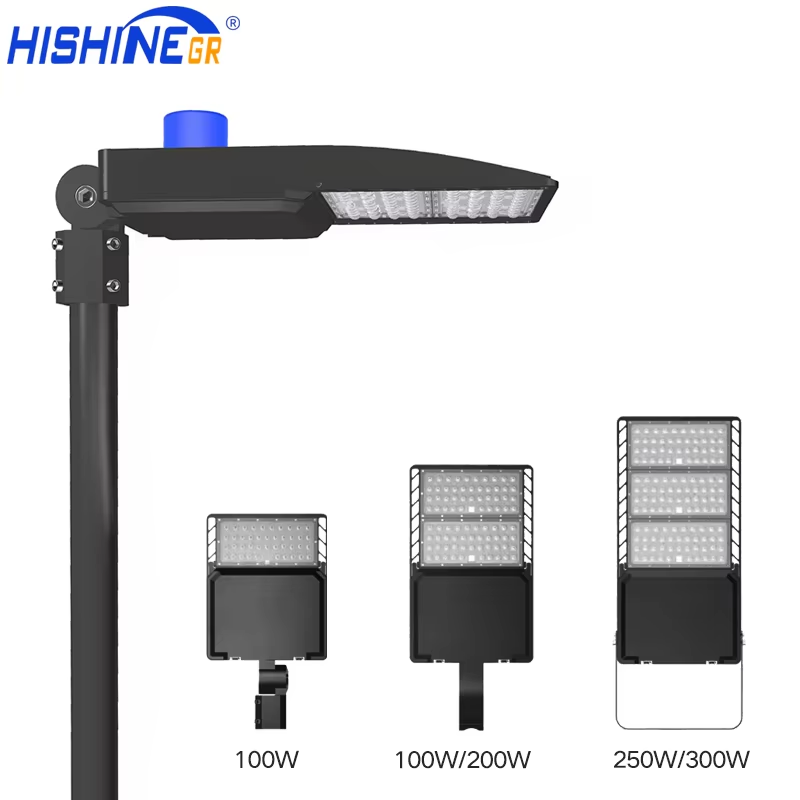
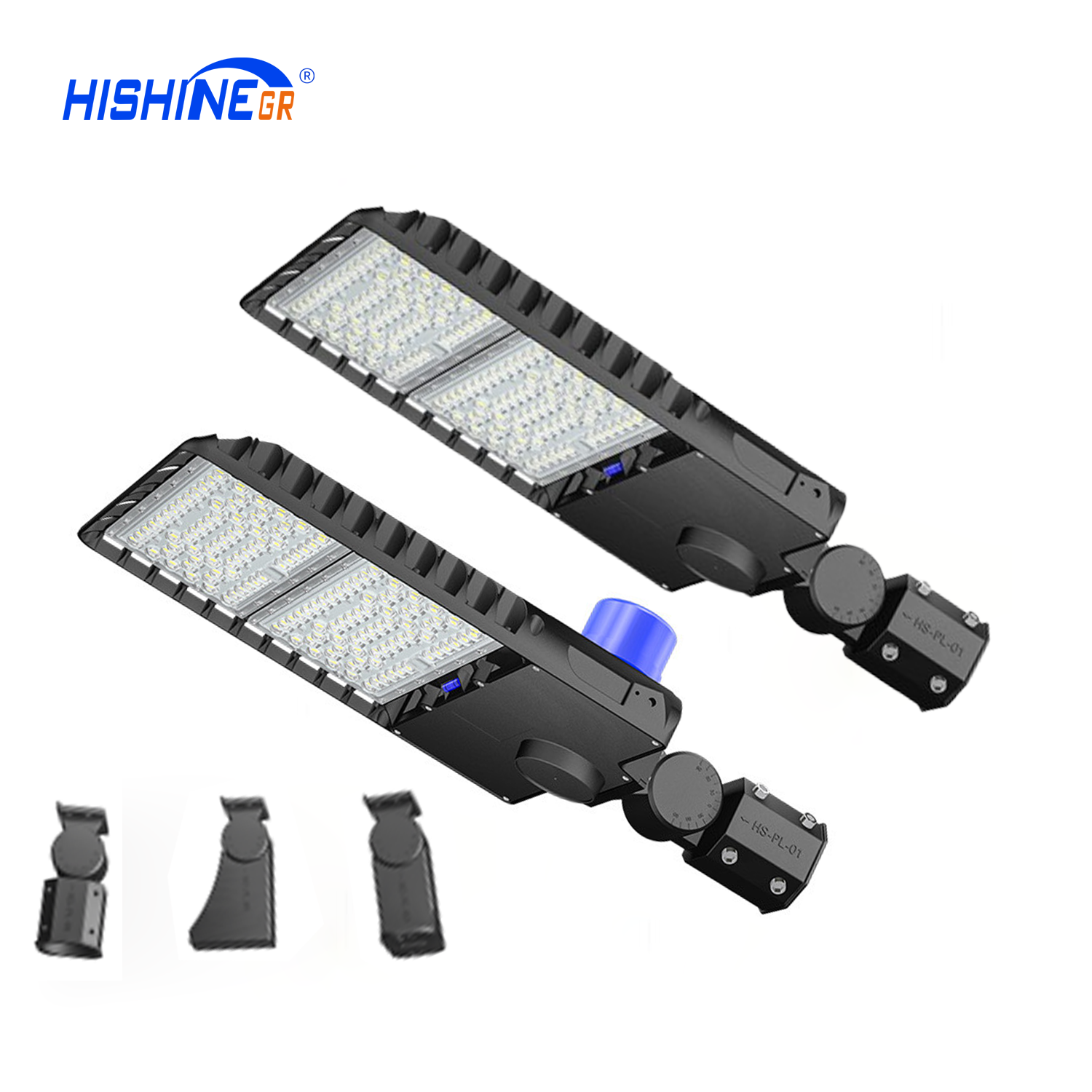
Evaluate Hishine Hi-Talent LED Parking Lot Light and Hishine Hi-Sun LED Parking Lot Light for area coverage using the exact optical options and mounting positions. Choose light direction to support the intended viewing surface. Camera performance must be tested with the actual equipment and settings; a luminaire specification does not establish CCTV image quality.
Prepare the project brief and acceptance checks
Send the site plan, camera fields of view, mounting heights, observation tasks, operating schedule and nearby sensitive boundaries. Agree test positions and acceptance responsibilities with the security team. Keep access lighting, emergency requirements and camera-specific illumination coordinated but clearly defined.